Why Your Dog Stretches When They See You (The Surprising Reason Behind It)
⏱ Estimated reading time: 6 min read

Have you
ever walked into a room, and the moment your dog sees you, they immediately
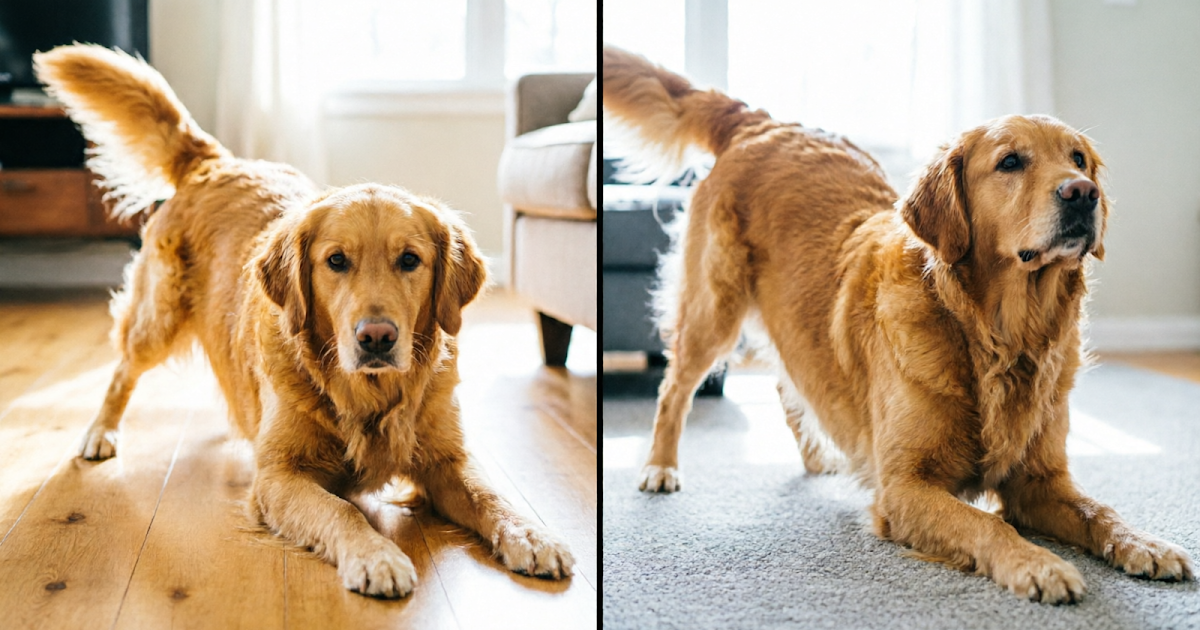
stretch? Maybe they extend their front legs forward, lower their chest to the
ground, and stick their rear end into the air. Some dogs even yawn at the same
time before happily walking over for attention.
Most owners
assume their dog is simply waking up or loosening stiff muscles. But here’s
something surprising:
That stretch
might actually be your dog’s way of greeting you. In fact, many dog behavior
experts believe that stretching can be a form of communication, affection, and
emotional expression. While physical comfort certainly plays a role, the timing
of the stretch often reveals something much deeper.
Let’s
explore why dogs stretch when they see their favorite humans—and what your
furry friend may be trying to tell you.
The
“Greeting Stretch” Is a Real Thing
Many dogs
perform what trainers often call a “greeting stretch. “This happens
when a dog sees someone they love and immediately stretches before approaching
them.
Unlike a
normal wake-up stretch, this type of stretch usually occurs right after making
eye contact with a person. You come home from work. Your dog notices you. They
stretch. Then they walk over with a wagging tail.
The sequence
is so common that many dog owners notice it without realizing it has a name. For
many dogs, it’s a positive social behavior associated with excitement and
comfort.
Your Dog May
Be Saying “I’m Happy to See You”
One of the most widely accepted
explanations is that stretching serves as a friendly signal. Dogs
communicate primarily through body language. They don’t
use words, so they rely on posture, movement, facial expressions, and tail
position to express emotions.
When your
dog stretches upon seeing you, they’re often displaying relaxed body language
that says:
- “Everything
is good.” - “I’m
comfortable.” - “I’m
happy you’re here.”
Think of it
as the canine version of a warm smile.
Stretching
Can Release Positive Energy
Dogs
experience excitement just like humans do. When
something pleasant happens—such as seeing their owner after a long day—they
often need a way to release that energy.
Some dogs:
- Wag their
tails furiously - Spin in
circles - Jump around
- Bring toys
- Others
stretch.
The stretch
helps transition the body from a resting state into an active, social one. It’s almost
like your dog is preparing themselves for the interaction they know is about to
happen.
It Shows
Your Dog Feels Safe Around You
Dogs rarely
expose vulnerable body positions when they feel threatened. During a
stretch, a dog temporarily lowers their guard and focuses on comfort rather
than protection. This is
important.
If your dog
consistently performs greeting stretches around you, it’s often a sign that
they feel secure in your presence. Trust is one
of the strongest foundations of the human-dog relationship. A relaxed
dog is usually a confident dog.
A greeting
stretch is often a sign of trust and emotional connection. Learn how to
strengthen that relationship in How to Build an Unbreakable Bond with Your Dog.
The Play Bow
Connection
Sometimes
what looks like a stretch is actually a “play bow.” A play bow
occurs when a dog:
- Lowers their
front half - Keeps their
rear end raised - Wags their
tail
This posture
is one of the most recognizable invitations to play in the canine world. Dogs use it
with other dogs and often with humans as well. When your
dog performs this movement after seeing you, they may be saying:
“Let’s
do something fun.”
“Pay
attention to me.”
“Come
play with me.”
The play bow
helps communicate friendly intentions and excitement.
Dogs Learn
Routines Faster Than We Think
Dogs are
incredibly observant. They quickly
learn patterns and routines. If your
arrival usually leads to:
- Walks
- Playtime
- Feeding
- Affection
Your dog may
begin anticipating these events before they happen. The greeting
stretch can become part of that routine.
Over time,
your dog associates seeing you with positive experiences and develops
predictable behaviors in response. Dogs often
remember daily patterns and associate your arrival with positive
experiences—see 11 Facts About Dog Memory That Will Surprise You.
Could It Be
a Sign of Stress?
In most
situations, stretching is completely normal. However,
context matters. Occasional
stretching during greetings is usually a positive sign. But
excessive stretching combined with other symptoms may indicate discomfort.
Watch for:
- Limping
- Difficulty
standing - Loss of
energy - Changes in
appetite - Signs of
pain
If your dog
suddenly begins stretching far more than usual or seems uncomfortable
afterward, it may be worth discussing with a veterinarian. The AmericanVeterinary Medical Association notes that understanding normal canine behavior
can help owners recognize when a dog may be experiencing discomfort or stress.
Why Puppies
Stretch So Often
Puppies
stretch constantly. Part of the
reason is simple:
They’re
growing. Young dogs
experience rapid physical development and spend a significant amount of time
sleeping. Stretching
helps wake up muscles and prepare the body for activity. Puppies also
tend to be highly expressive, making greeting stretches even more common.
Different
Breeds Express Excitement Differently
Not all dogs
communicate in exactly the same way. Some breeds
are naturally more expressive than others. For example:
- Golden
Retrievers often use full-body movements. - Labrador
Retrievers may combine stretching with tail wagging. - Border
Collies often become intensely focused. - Greyhounds
may perform long, dramatic stretches.
Individual
personality matters just as much as breed. Some dogs
simply enjoy stretching more than others.
Other Signs
Your Dog Is Happy to See You
Stretching
isn’t the only greeting behavior dogs use. You may also
notice:
- Tail Wagging: A loose,
relaxed wag often signals happiness. - Soft Eyes: Relaxed eyes
indicate comfort and trust. - Leaning
Against You: Many dogs
seek physical contact with people they love. - Bringing
Toys: Dogs often
present favorite toys as a social gesture. - Following
You Around: A dog that
shadows you may simply enjoy your company.
When these
behaviors appear alongside stretching, they’re usually signs of a positive
emotional state.
When these
behaviors appear alongside stretching, they’re usually signs of a positive
emotional state.
The Science
Behind Stretching and Emotions
Researchers
continue studying how dogs communicate emotions through body language. While dogs
obviously stretch for physical reasons, behavioral studies suggest many canine
actions serve multiple purposes. Stretching
can be:
This is one
reason dog behavior remains so fascinating. Simple
actions often carry more meaning than we initially realize.
What Should
You Do When Your Dog Stretches?
The answer
is simple: Enjoy the
moment. Respond
with:
- Praise
- Gentle
affection - Playtime
- Positive
interaction
These
responses strengthen your bond and reinforce positive communication. Your dog
isn’t just stretching. They’re
interacting with you. Stretching
is just one of many behaviors that seem strange but actually have intelligent
explanations. See 11 Weird Dog Habits That Are Actually Smart.
Conclusion
The next
time your dog stretches when they see you, don’t assume it’s just about tired
muscles. In many
cases, it’s a sign of comfort, trust, excitement, and affection.
Dogs
communicate through body language every day, and the greeting stretch may be
one of the sweetest messages they send. So when your
dog stretches, wags their tail, and walks toward you with bright eyes,
remember: They might
be saying something very simple. “I’m
happy you’re here.”