Fi vs Tractive: Which GPS Dog Tracker Is Better in 2026?
⏱ Estimated reading time: 11 min read
Short version: after using both on my own dogs, I prefer Fi. It has been the truer, more reliable GPS dog tracker for us, it glitches less, the battery lasts longer in real life, and I vastly prefer living with the Fi app every day.
That does not make Tractive a bad tracker. In fact, Tractive has a few very sensible advantages, particularly if you want a device that clips onto an existing collar or you travel internationally. But on our remote, heavily wooded property, Fi is the one I trust on Lucy and Shelby.
This article contains affiliate links. If you buy through one, I may earn a commission at no extra cost to you. I only recommend products I have actually used and would choose for my own dogs.
Fi vs Tractive at a Glance
My winner: Fi
Fi has been more accurate and dependable in our real-world setup, with fewer glitches, better battery life and a much nicer app. Tractive wins for clip-on flexibility, faster published LIVE updates and international coverage.
| Comparison | Fi Series 3 / 3+ | Tractive DOG 6 / DOG 6 XL |
|---|---|---|
| Tracker setup | Integrated into a compatible collar band | Clip-on device that can move between collars |
| Current price model | Device included with an active membership; $20 activation fee | $79 device plus subscription |
| US subscription* | $99/6 months; $189/year; $339/2 years | Basic from $108/year; Premium from $120/year |
| Claimed battery | Up to 3 months for Series 3+ | DOG 6: up to 14 days; DOG 6 XL: up to 42 days with a Power Saving Zone |
| My real battery experience | Roughly 3–6 weeks on our current Series 3 units; I still need to verify the precise recent figure | Shorter than Fi in our use |
| Water resistance | IP68 and IP66K | IP68 |
| Location updates | About every 5 minutes by default away from home; adjustable GPS Rate and live tracking options | Every 2–60 minutes normally; every 2–3 seconds in LIVE Tracking |
| Collar fit | Works with our 1.5-inch Tactipup collars using compatible Fi integration | Flexible clip-on attachment |
| Health/activity features | Activity and rest on Series 3; Series 3+ adds current AI behavior features | Activity, sleep, health alerts, vitals, bark and scratch monitoring on DOG 6 models |
| International coverage | United States, Canada and Mexico on Series 3+ | 175+ countries with Premium where supported cellular coverage exists |
| My winner | Fi | Best if clip-on flexibility or wider international use matters most |
How I Tested Fi and Tractive
This is not a comparison assembled from two product pages. I have used both Fi and Tractive on my own dogs in real life.
Lucy and Shelby are senior coonhounds, both over ten, with the sort of prey drive that makes a tracker genuinely useful rather than just interesting. Lucy still covers roughly six miles a day. They are not sprinting around a neat suburban block either; we live on a remote, densely wooded property where tree cover gives GPS devices something meaningful to think about.
We do have excellent Wi-Fi coverage across our land, and that matters. Fi can use the home network and its base to conserve power and understand when the dogs are safely at home. Someone with patchy Wi-Fi, different cellular coverage or a more urban environment may get different results. This is a firsthand verdict, not a claim that my property is a universal laboratory.
Our hounds wear Fi 24/7. I like having the location, activity and rest information in one place, but I would not confuse that with a clinical health device or use it as a replacement for veterinary care.
Tracking Accuracy and Reliability in the Woods
For us, Fi has simply been truer. Its location has more consistently matched where the dogs actually are, and the whole system glitches less often than Tractive did in our environment.
That is the biggest reason Fi wins. A GPS tracker can have a longer feature list, prettier marketing and a faster theoretical update rate, but its fundamental job is telling me where my dog is. When Lucy or Shelby is moving through dense tree cover, I care far more about the map being believable than I do about a specification in isolation.
Fi currently sells the Series 3+, while most of my long-term experience is with Series 3. Fi says the newer 3+ has an enhanced antenna and offers twice-as-fast, more accurate GPS than Series 3. That sounds promising, but I am keeping my own verdict tied to the hardware I have actually used rather than quietly pretending I have years of experience with a new model.
Escape Alerts and Live Tracking
Fi is not flawless. We get a false escape alert very occasionally—roughly once a year. That is rare enough that I do not consider it a serious problem, but it would be dishonest to say it never happens.
Fi reports a GPS location about every five minutes by default when the dog is away from home. Its current GPS Rate controls allow intervals from one to eight minutes, plus Constant Tracking, and Lost Mode supplies live location updates. As with every cellular GPS tracker, faster tracking uses more battery.
Tractive publishes the more precise—and faster—LIVE Tracking figure: an update every two to three seconds. Outside LIVE mode, Tractive says updates can range from two to 60 minutes depending on the dog’s movement and conditions. If seeing a very fast trail on screen is your main priority, Tractive has a legitimate advantage here.
Neither is an off-grid radio tracker. Both still need compatible cellular coverage to send the GPS position to your phone. “Unlimited range” sounds lovely in marketing, but it means no fixed Bluetooth-style distance limit; it does not mean the tracker can communicate from a cellular dead zone.
Battery Life: The Claim and the Real World
Fi claims up to three months for Series 3+. Tractive claims up to 14 days for DOG 6 and up to 42 days for DOG 6 XL when the tracker can use a Power Saving Zone. Without one, those Tractive estimates fall to six days and 20 days respectively.
Our current Fi Series 3 units generally seem to land somewhere around three to six weeks between charges. I want to flag that as an estimate because I still need to verify the precise recent figure rather than declare it with fake scientific confidence. Our extensive home Wi-Fi coverage will also help.
Even with that caveat, Fi has lasted longer than Tractive in our actual use. That matters because a tracker sitting on the charger cannot help me find a coonhound who has developed sudden and extremely selective hearing.
Collar Design and Comfort
This category depends enormously on what you want.
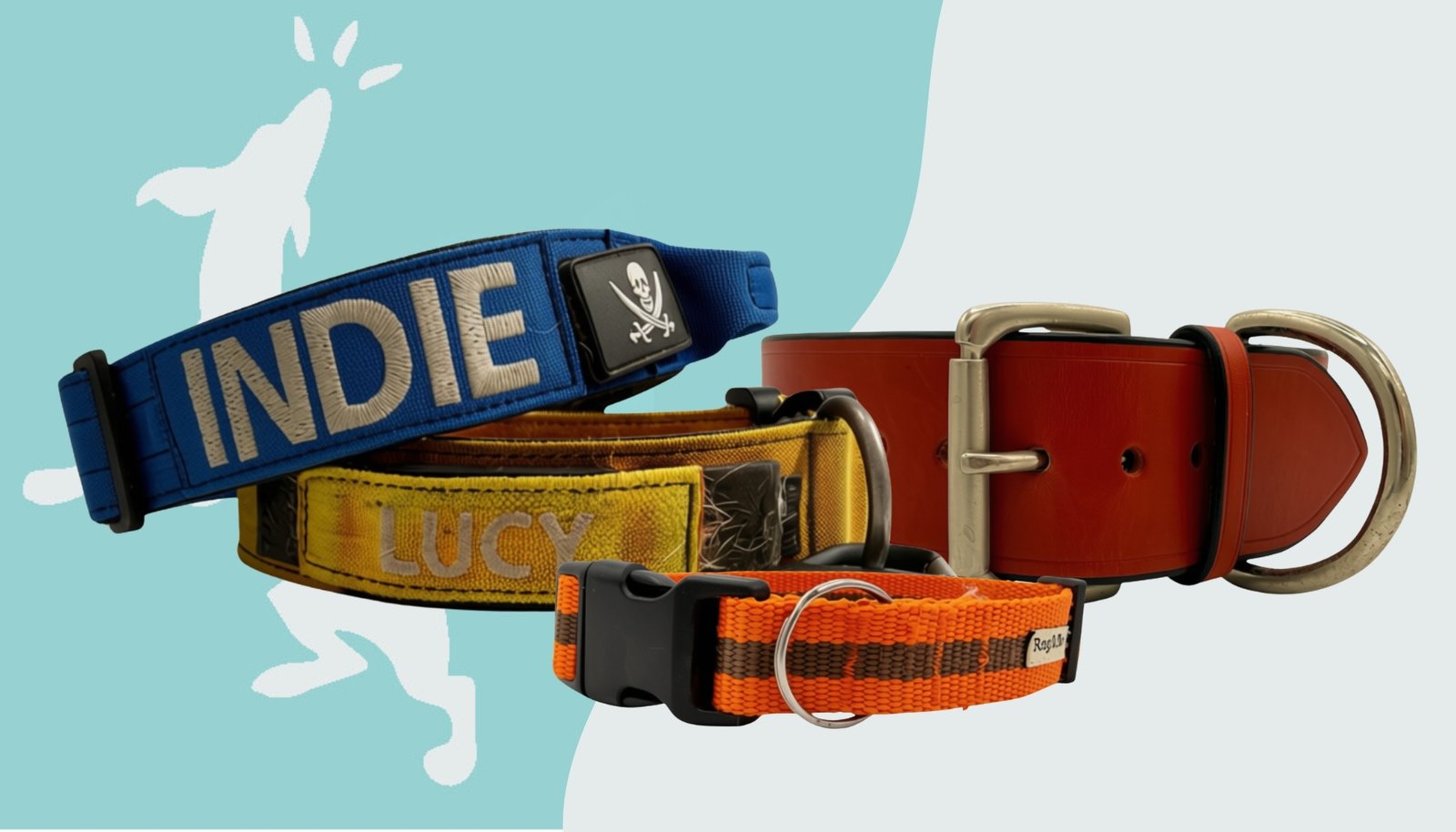
Fi is the neater, integrated system. Our devices work with compatible Fi hardware built into our 1.5-inch Tactipup collars, which matters to me. These are large, strong hounds, and I do not want to downgrade the collar setup I already trust just to accommodate a tracker. Fi’s own stock Series 3+ bands are narrower—0.75 or one inch depending on size—so I am specifically describing our aftermarket setup.
Tractive clips onto the collar. That is less streamlined, but much more flexible. If your dog has several collars, you want to move one tracker between them, or you are deeply attached to an existing collar with no Fi-compatible option, Tractive may make more practical sense.
The Apps: Fi Has More Personality
I prefer the Fi app by quite a margin. It is nicer, clearer and easier to live with, but it also has more personality. That sounds like a fluffy consideration until you remember that the useful tracker is the one you keep charged, understand and actually check.
I enjoy the breed and activity leaderboards far more than I probably should. There is something deeply satisfying about opening the app and discovering that Lucy, who is over ten, is still sitting surprisingly high among coonhounds while quietly clocking around six miles a day.
Tractive’s app is capable and offers useful maps, virtual fences, location history and health data. I just found Fi’s presentation clearer and the overall experience more polished.
Health and Activity Features
Tractive DOG 6 and DOG 6 XL currently offer the fuller published health list: activity and sleep monitoring, health alerts, resting heart and respiratory rate trends, bark monitoring and scratch monitoring. Those trends can be useful prompts to pay attention, but Tractive correctly states that it is not a medical device.
Series 3 tracks activity and rest. Series 3+ now adds AI-powered tracking for eating, drinking, barking, licking and scratching, along with current health insights and Apple Watch support. Again, those are current Series 3+ features, not results from my years of using Series 3.
I use Fi as an everyday collar that happens to give me useful activity and rest context. If your primary goal is detailed health monitoring rather than locating an escapee, compare these features carefully and talk to your veterinarian about anything medically meaningful.
Fi vs Tractive Price in 2026
Prices checked July 29, 2026: Fi’s US Series 3/3+ memberships are $99 for six months, $189 for one year or $339 for two years, with a one-time $20 activation fee. The current tracker is included with the membership, an active plan is required, and the initial commitment is at least six months.
Tractive’s DOG 6 and DOG 6 XL are currently $79 for the device. Basic is listed at $108 for one year or $144 for two years. Premium is $120 for one year, $168 for two years or $300 for five years. Each Tractive tracker needs its own plan, and prices can vary by location.
Fi costs more on an annual basis, but price is not the only value calculation. I would rather pay for the tracker that has been more reliable on our land and that I am happier to use every day.
Who Should Buy Fi?
- You want the tracker integrated neatly into the collar.
- Battery life and fewer charging interruptions matter.
- You value a clear, engaging app and activity community.
- You have reliable Wi-Fi at home and supported cellular coverage where you walk.
- You want the option of compatible aftermarket collar bands, including a setup for wider collars.
If that sounds like you, check Fi’s current offers here, or read my full long-term Fi Series 3 review.
Who Should Buy Tractive?
- You want a clip-on tracker that moves easily between collars.
- You want the published two-to-three-second LIVE Tracking updates.
- You travel beyond the US, Canada and Mexico and need wider supported international coverage.
- You prioritize DOG 6’s current vitals, bark and scratch monitoring.
- You prefer a lower initial commitment and are comfortable charging more often.
For that use case, check the current Tractive price here. Tractive is also my runner-up in my broader guide to the best GPS trackers for dogs.
My Final Verdict: Fi Wins
Fi is the better GPS dog tracker for us in 2026. It has been more accurate on our wooded property, more reliable, less glitchy and better on battery, and I prefer both the integrated collar setup and the app.
Tractive remains a good, flexible option. I would choose it for easy clip-on use, rapid LIVE updates or broader international travel. But when I look at Lucy and Shelby—the actual high-prey-drive senior hounds I need to keep track of—it is Fi they wear every day.
Fi vs Tractive FAQ
Is Fi or Tractive better?
Fi is better for my dogs and our remote, wooded property because it has been more accurate, reliable and battery-efficient in real use. Tractive may be better if you need a clip-on design, very fast LIVE updates or coverage in more countries.
Does Fi update as fast as Tractive?
Tractive publishes updates every two to three seconds in LIVE Tracking. Fi reports around every five minutes by default away from home, offers adjustable GPS Rate settings, Constant Tracking and live updates in Lost Mode. Actual performance for both depends on GPS and cellular conditions.
Which has better battery life, Fi or Tractive?
Fi claims up to three months for Series 3+. Tractive claims up to two weeks for DOG 6 or six weeks for DOG 6 XL with a Power Saving Zone. In my own use, Fi has lasted longer, with our current Series 3 units roughly in the three-to-six-week range pending a more precise recent check.
Do Fi and Tractive require subscriptions?
Yes. Both use cellular connectivity to send GPS locations to your phone, so both require an active subscription. Each dog generally needs its own device and plan.
Official Specifications Checked