
As an Amazon Associate I earn from qualifying purchases. Learn More
Updated November 2026
When I was a young woman living in my first house, somehow word got around the neighborhood that I was the lady who loved animals.
Before long, kids in the neighborhood (and even some adults) started bringing me their pets or injured wildlife that needed help.
I always explained that I had no medical training, and if an animal needed professional care, I encouraged them to see a veterinarian. But for minor injuries, I did what I could to help.
That’s when I put together my very first pet first aid kit.
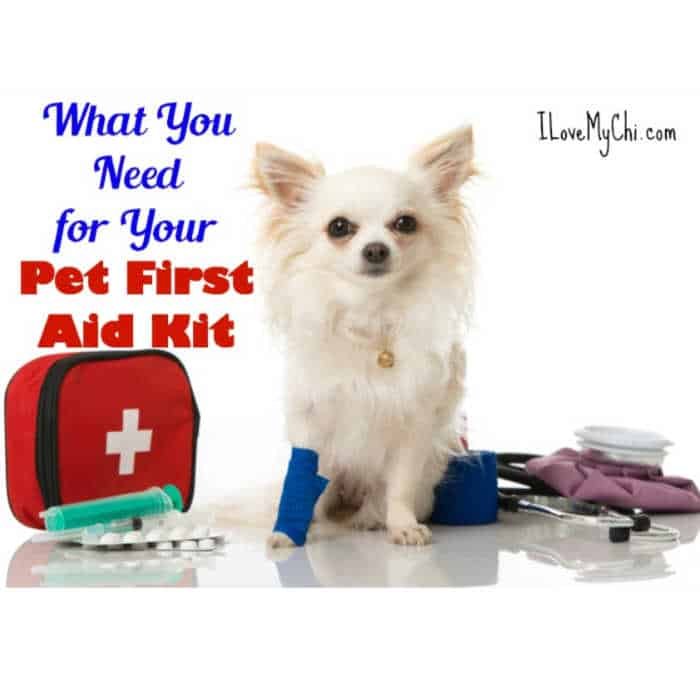
These days, you can easily buy a ready-made pet first aid kit, but you can also make your own. And even if you buy one, you’ll eventually need to replace supplies or add items that weren’t included.
Every dog owner should have a first aid kit handy. You never know when your furry little friend might get hurt, and having the right supplies nearby can make a stressful situation a little easier.
This is especially important for Chihuahuas and other small dogs, since their tiny size can make certain injuries more serious.
Let’s go over what you should keep in your dog’s first aid kit, how to use some of the supplies, and when it’s time to head straight to the veterinarian.
Why Every Dog Owner Needs a First Aid Kit
Dogs are curious creatures, and sometimes that curiosity gets them into trouble!
Your Chihuahua might step on something sharp, break a toenail, get stung by an insect, or suffer a minor scrape while playing.
Having a first aid kit means you won’t have to search through drawers for gauze or bandages while your dog is hurting.
A properly stocked kit can help you:
- Clean minor cuts and scrapes.
- Control bleeding while seeking veterinary care.
- Flush dirt or debris from minor wounds.
- Protect an injury until your dog can see the vet.
- Respond more quickly during an emergency.
Remember: A pet first aid kit is not a replacement for veterinary care. It’s meant to help you provide immediate assistance until your dog can receive professional treatment if needed.
If you don’t have any medical experience, it would also be beneficial to take a first aid class, so when the time comes that you need that kit, all of the tools won’t be useless. I have taken 2 first aid classes for pets over the years and highly recommend taking one.
A first aid book for pets is a good idea too.
What Should Be in a Dog First Aid Kit?
You don’t need to spend a fortune putting together a first aid kit for your dog.
Many supplies are inexpensive, and you might already have some of them at home.
Here are the essentials I recommend keeping on hand.
1. Bandages and Wound Care Supplies
Cuts, scrapes, and broken toenails are among the injuries you might need to deal with.
Keep these supplies in your kit:
Sterile gauze pads: Useful for covering wounds and applying pressure to bleeding areas.
Nonstick wound pads: These help protect wounds without sticking to the injured skin.
Gauze rolls: Helpful for holding dressings in place.
Self-adhering bandage wrap: Often called Vet Wrap, this sticks to itself rather than your dog’s fur. Be extremely careful not to wrap it too tightly, since it can restrict circulation.
Medical tape: Helps secure bandages without placing adhesive directly on your dog’s fur.
Sterile saline solution: Useful for gently flushing dirt and debris from minor wounds.
Veterinarian-approved wound spray: Choose one specifically intended for pets.
Styptic powder: This is particularly handy when you accidentally trim a toenail too short. It helps stop minor nail bleeding.
For Chihuahuas, look for smaller gauze pads and bandages that are easier to use on tiny legs and paws.
2. Basic First Aid Tools
You’ll also want a few tools that can come in handy during an emergency.
Tweezers: Useful for removing small pieces of debris or an easily accessible splinter. Don’t dig into the skin or attempt to remove deeply embedded objects yourself.
Blunt-tip scissors: Safer for cutting gauze and bandages near your dog’s skin.
Digital rectal thermometer: A thermometer designed for pet use can help you check your dog’s temperature. Keep a small tube of water-based lubricant with it.
Disposable gloves: Protect both you and your dog when handling wounds.
Small flashlight: Helpful for examining paws, ears, or injuries in poorly lit areas.
Oral syringe without a needle: Useful for administering veterinarian-directed liquid medication.
Tick removal tool: Makes removing attached ticks easier.
Clean towels: Useful for applying pressure to wounds, keeping your dog warm, or helping with gentle restraint.
3. Emergency Supplies
Some additional items can be especially helpful if your dog is seriously injured or you need to get to the veterinarian quickly.
A spare leash and harness: Useful if your dog gets loose or their regular harness and/or leash are damaged.
A small blanket: Helps keep an injured dog comfortable and can be used to gently carry a small dog.
An instant cold pack: May help with certain minor injuries when recommended by your veterinarian. Always wrap it in a towel rather than applying it directly to the skin.
A soft muzzle: Even the sweetest dog might bite when frightened or in pain. However, never muzzle a dog that is vomiting, having trouble breathing, or experiencing heatstroke.
A small carrier: Particularly useful for transporting an injured Chihuahua without allowing them to move around too much.
A pet first aid guide: Having written instructions available can be helpful when you’re stressed and trying to remember what to do.
You might also consider taking a pet first aid and CPR class. Knowing how to use your supplies is just as important as having them.
Medications and Products to Use Only With Veterinary Instructions
This is one area where dog owners need to be especially careful.
Some products commonly found in pet first aid kits can actually cause harm if used incorrectly.
Hydrogen Peroxide
You may have heard that hydrogen peroxide can be used to make a dog vomit after swallowing something poisonous.
While veterinarians sometimes recommend 3% hydrogen peroxide in very specific circumstances, it can be dangerous when used incorrectly.
Never try to make your dog vomit unless your veterinarian or an animal poison control specialist specifically instructs you to do so.
Some substances can cause even more damage if vomited back up, and hydrogen peroxide itself can irritate the digestive tract.
Hydrogen peroxide should also not be used to clean wounds because it can damage healthy tissue and delay healing.
Activated Charcoal
Activated charcoal is sometimes used by veterinary professionals to treat certain poisonings.
However, it doesn’t work for every toxin and can cause serious complications if administered incorrectly.
Don’t give activated charcoal to your dog unless a veterinarian or animal poison control specialist directs you to do so.
Antibiotic Ointments
Some topical antibiotic ointments may be appropriate for minor wounds, but not every human product is safe for dogs.
Ask your veterinarian which product they recommend, and avoid anything containing added pain-relieving ingredients unless specifically approved.
Dogs may also lick ointments off their skin, so preventing licking is important.
Human Pain Relievers and Other Medications
Never give your Chihuahua medications such as ibuprofen, naproxen, or acetaminophen unless your veterinarian specifically prescribes or directs their use.
Some human medications can cause life-threatening poisoning in dogs.
The same caution applies to allergy medications, anti-diarrhea products, and other over-the-counter treatments.
It’s a good idea to ask your veterinarian whether there are any medications they recommend keeping in your dog’s emergency kit.
Special First Aid Considerations for Chihuahuas
Although the basic first aid supplies are the same for most dogs, Chihuahuas have a few special needs.
Their Small Size Matters
A Chihuahua has much less blood circulating through their body than a large dog.
That means ongoing bleeding can become dangerous more quickly.
If your Chihuahua has a bleeding wound, apply steady pressure with clean gauze or a towel and contact your veterinarian promptly. Heavy bleeding, bleeding that won’t stop, or signs of weakness require emergency care.
They Can Lose Body Heat Quickly
Small dogs can become chilled more easily, especially when injured, wet, or in shock.
Keeping a lightweight blanket in your first aid kit is a good idea.
However, don’t overheat your dog or use heating pads directly against their skin.
Their Bones Are Delicate
Chihuahuas can suffer injuries from falls, being stepped on, or jumping from furniture.
If you suspect a broken bone, avoid manipulating the injured leg or trying to straighten it.
Keep your dog as still as possible and seek veterinary care.
Bandages Must Fit Properly
A bandage that might be fine for a Labrador could be much too bulky or tight for a Chihuahua.
Even a slightly tight wrap can interfere with circulation in a tiny leg.
Ask your veterinarian to demonstrate safe bandaging techniques before you need them.

What to Do During Common Dog Emergencies
Knowing a few basic first aid steps can make a big difference.
If Your Dog Has a Cut or Scrape
For a small, superficial wound:
- Gently rinse the area with sterile saline.
- Apply light pressure with clean gauze if it’s bleeding.
- Prevent your dog from licking the wound.
- Contact your veterinarian if the wound is deep, painful, contaminated, swollen, or continues bleeding.
Bite wounds and punctures should be evaluated by a veterinarian even if they look small.
If Your Dog Breaks a Toenail
Broken toenails can bleed quite a bit!
Apply gentle pressure with gauze and use styptic powder if appropriate.
If the nail is torn near the base, your dog is limping, or bleeding continues, contact your veterinarian.
Don’t pull off a partially attached nail yourself.
If Your Dog Is Stung by an Insect
If you can see a bee stinger, you may be able to gently remove it without squeezing the venom sac. Try using a butter knife or credit card to scrape the stinger off.
Watch your dog closely afterward.
Facial swelling, repeated vomiting, difficulty breathing, collapse, or sudden weakness can indicate a serious allergic reaction.
These symptoms require immediate emergency veterinary care.
If Your Dog Eats Something Poisonous
If you suspect your Chihuahua swallowed chocolate, grapes, medication, a toxic plant, or another dangerous substance, don’t wait for symptoms to appear.
Contact your veterinarian or an animal poison control center immediately.
Don’t induce vomiting or give home remedies unless instructed.
If possible, keep the packaging or take a picture of what your dog swallowed so you can provide accurate information.
Important Emergency Phone Numbers to Keep in Your Kit
During an emergency, you don’t want to waste time looking up phone numbers.
Write down the following information and keep it inside your first aid kit:
- Your regular veterinarian’s phone number and address.
- Your nearest 24-hour emergency veterinary hospital.
- Your dog’s medications, allergies, and medical conditions.
- Your dog’s current weight.
- A copy of important vaccination and medical records.
Two animal poison control services are also available around the clock:
ASPCA Animal Poison Control Center: 888-426-4435
Pet Poison Helpline: 855-764-7661
Both services may charge a consultation fee.
I also recommend saving these numbers in your phone.
Should You Buy a Pet First Aid Kit or Make Your Own?
Either option is perfectly fine!
A ready-made pet first aid kit can be convenient, especially if you’re starting from scratch.
However, not every kit includes everything you need.
Some have supplies that aren’t particularly useful, while others are missing important items such as styptic powder, saline, or a thermometer.
If you buy a kit, go through the contents and add anything that’s missing.
You can also build your own using a small plastic storage box, zippered pouch, or waterproof container.
Just make sure everything is organized and easy to find.
Don’t Forget a Travel First Aid Kit
If your Chihuahua travels with you, consider keeping a smaller first aid kit in your car or travel bag.
Include basic wound care supplies, tweezers, a tick remover, disposable gloves, and emergency contact information.
A collapsible water bowl and spare leash are useful additions.
If you’re traveling away from home, look up the nearest emergency veterinarian before your trip.
And remember that medications and certain supplies can be damaged by extreme heat or cold, so don’t leave them in a hot car.
How Often Should You Check Your Dog’s First Aid Kit?
I recommend checking your kit every three to six months.
Make sure:
- Nothing has expired.
- Sterile packaging is still intact.
- Used supplies have been replaced.
- Batteries in your flashlight still work.
- Emergency phone numbers are current.
- Your dog’s medication list and weight are up to date.
Keep the kit somewhere that’s easy for adults to reach but safely away from pets and children.
Dog First Aid Kit Checklist
Here’s a handy checklist you can use when putting together your kit.
Wound Care Supplies
- Sterile gauze pads
- Nonstick wound dressings
- Gauze rolls
- Self-adhering bandage wrap
- Medical tape
- Sterile saline solution
- Veterinarian-approved wound spray
- Styptic powder
Tools
Emergency Supplies
- Clean towel
- Small blanket
- Wrapped instant cold pack
- Spare leash and harness
- Appropriately sized muzzle
- Pet carrier
- Pet first aid guide
- Emergency contact information
- Medical records and medication list
Veterinarian-Approved Extras
- Recommended topical antibiotic ointment
- Any emergency medications specifically prescribed for your dog
- Other supplies recommended by your veterinarian
Frequently Asked Questions About Dog First Aid Kits
Can I use a human first aid kit for my dog?
Many basic supplies, such as gauze, bandages, gloves, and scissors, can be used for both people and dogs.
However, human first aid kits often contain medications and products that aren’t safe for pets.
It’s best to have a separate kit specifically for your dog.
What is the most important thing in a dog first aid kit?
Gauze, sterile saline, bandaging supplies, and emergency contact information are among the most useful essentials.
However, knowing when your dog needs veterinary attention is even more important than having supplies.
Can I use hydrogen peroxide to clean my dog’s wound?
No. Hydrogen peroxide can damage healthy tissue and slow healing.
Sterile saline is generally a better choice for gently flushing minor wounds.
Should I keep Benadryl in my dog’s first aid kit?
Only if your veterinarian recommends it for your particular dog and provides instructions.
Not all formulations are appropriate for dogs, and serious allergic reactions require emergency veterinary care.
Do I need a special first aid kit for my Chihuahua?
You don’t necessarily need a Chihuahua-specific kit, but it’s helpful to choose supplies that fit a small dog.
Smaller bandages, an appropriately sized carrier, and a lightweight blanket are particularly useful.
Where should I store my pet first aid kit?
Keep it in a dry, temperature-controlled location where you can quickly find it.
Make sure everyone in your household knows where it is.
Final Thoughts
Hopefully, you’ll never have to deal with a serious emergency involving your Chihuahua.
But accidents do happen, even to the most careful pet parents.
Having a well-stocked pet first aid kit gives you one less thing to worry about when your furry friend needs help.
Whether you buy a ready-made kit or put one together yourself, take a little time to make sure you have the essentials.
And if you haven’t already, consider learning basic pet first aid and CPR. It could make a real difference someday.
For more ways to keep your dog safe, be sure to read my article on how to prepare your dog for disasters.
Do you already have a first aid kit for your Chihuahua? Is there anything you keep in yours that I didn’t mention? Let me know in the comments!
Pet Blogger
I have had dogs all my life. I have been a pet groomer, worked in a pet hotel, and a kennel, and have bred and showed dogs.
Paula Simons
DVM
This article has been reviewed, fact-checked, and approved by Dr. Paula Simons DVM. You can read more about her on our About page.

Views: 4,524