Book spotlight: The Bloody Greek Cat — a funny memoir about living in Greece with 35 rescue cats
⏱ Estimated reading time: 10 min read
Last Updated on 29 July 2026 by Vanessa
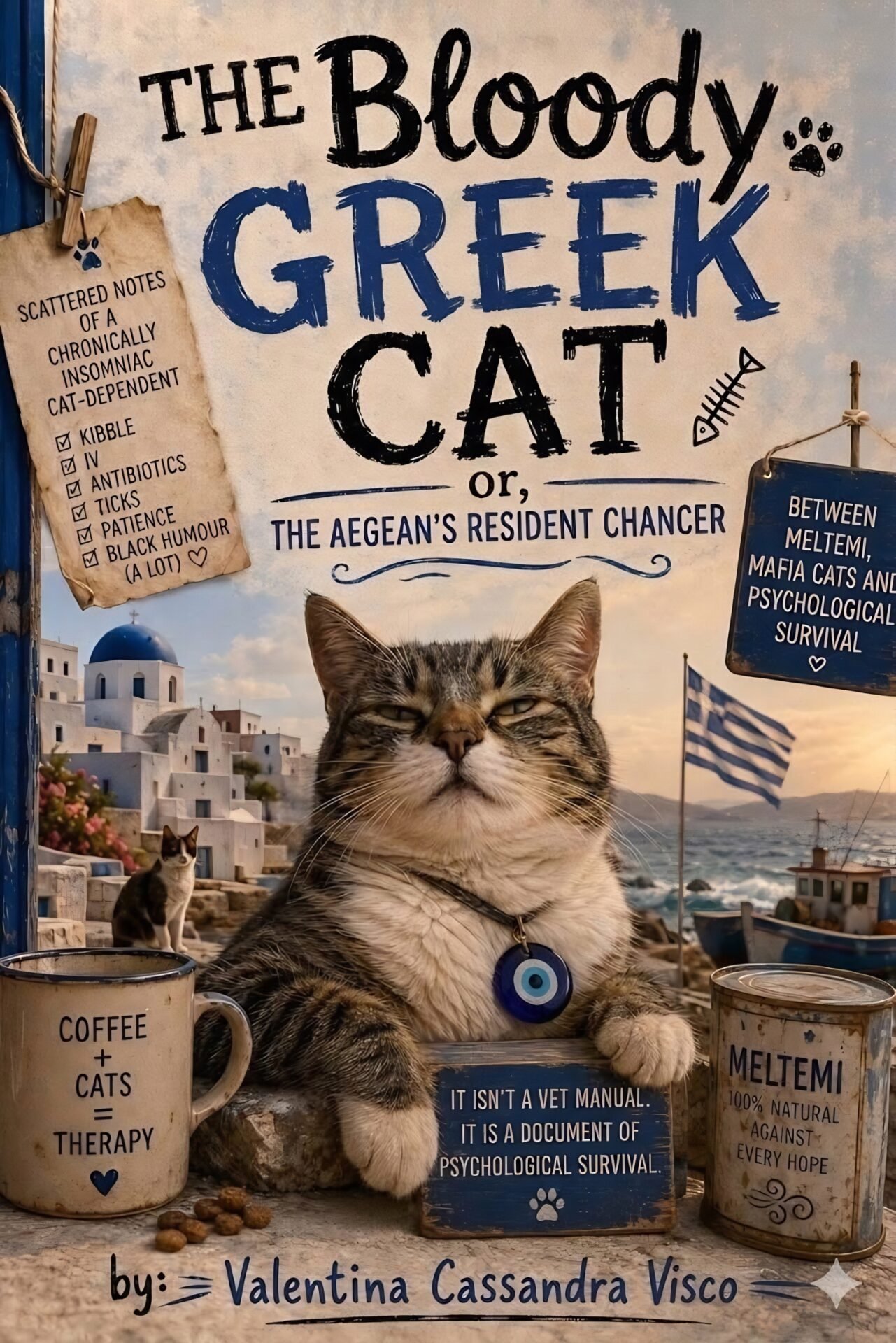
Looking for your next read? Preferably one that will transport you straight to the sun-soaked Greek island of Paros while making you laugh out loud? Then The Bloody Greek Cat deserves a spot on your to-read list.
In this funny memoir, the author recounts more than a decade of living in Greece, as an expat on Paros, where everyday island adventures are regularly interrupted by an ever-growing cast of stray cats.
What makes this book even more special is that every single cent from book sales helps pay for food, veterinary care, and other essentials for the rescue cats mentioned in these pages.
We caught up with the author, Valentina Cassandra Visco, to talk about life on Paros, the unforgettable cats that inspired the book, and why laughter can be one of the best ways to tell a true story.
Who will enjoy this book?
You will love The Bloody Greek Cat if you:
- Love Greece
- Are obsessed with cats
- Enjoy funny memoirs
- Are dreaming about living on a Greek island
Life on a Greek island
Ten years ago, author Valentina Cassandra Visco and her partner swapped everyday life in Italy for the Greek island of Paros, the third largest island in the Cyclades after Naxos and Andros.
If you’ve never been to Paros, picture the whitewashed houses, blue-domed churches, winding alleyways, and colorful bougainvillea that have made Mykonos Town famous. The architecture is remarkably similar, but that’s where the comparison ends. Unlike its glamorous neighbor, Paros has a much more relaxed atmosphere and attracts visitors looking for authentic Greek island life rather than luxury beach clubs and all-night parties.

“I first visited Greece many years ago and immediately fell in love with it,” Valentina told Traveling Cats. “At the time, I was staying on Ios, which is known as a party island. So when we decided to move to Greece, I chose Paros because it’s better suited to ‘old’ people like us. It’s quieter, less crowded, and, most importantly, it still has residents during the winter.”
The Bloody Greek Cat grew out of Valentina’s frustration with the reality of living in Greece and the constant stress and exhaustion that came with caring for Paros’ many stray cats.
“Many tourists think Greece is summer all year long and that everyone here is living the good life, as if they’re on vacation every day,” Valentina says. “Well… that’s not how it is.”
Her relationship with the island’s cats, she admits, is a complicated one.
“I love them,” she says. “And sometimes I think they’ve ruined my life. It’s a bit like Stockholm syndrome: I’m a prisoner who’s deeply in love with her jailer.”
Fortunately for readers, that frustration inspired The Bloody Greek Cat, a memoir that’s every bit as insightful as it is hilarious.
From Paros expat to cat caretaker
What started as a move to a beautiful Greek island slowly turned into something very different: a life dedicated to caring for its many stray cats.
In The Bloody Greek Cat, Valentina describes the harsh reality faced by many of Greece’s cats:
“The line I hear most often is: ‘They won’t starve.’ And that’s true, more or less. Because the sea cats fish, hunt, steal, beg, survive. They’re adapted creatures. But surviving doesn’t mean doing well. It doesn’t mean having clean water, medicine, shelter, a treated wound, or someone who notices when you’re slowly dying.
Street life wears you down. The salt, the wind, the infections, the fights, the thirst in summer, the damp in winter. And then there’s man—sometimes cruel, but more often simply indifferent, which might be worse. Because indifference doesn’t shout, doesn’t strike, doesn’t get its hands dirty. It just walks on by.”
This realization led Valentina to start caring for Paros’ stray cats and taking many of them in herself.
“This will be the last one to come live with us,” she tells herself every time.
But, as any animal rescuer knows, it rarely works that way.
Today, around 35 cats live in and around her home. And that’s not counting the temporary guests and the stray colonies across the island that she feeds and cares for, which brings the total to more than 70.
Valentina is the kind of cat lady who carries kibble in her bag—along with an emergency kit for wounds, ticks, fungal infections, and whatever else the day might bring.
The rescue cats that inspired the book
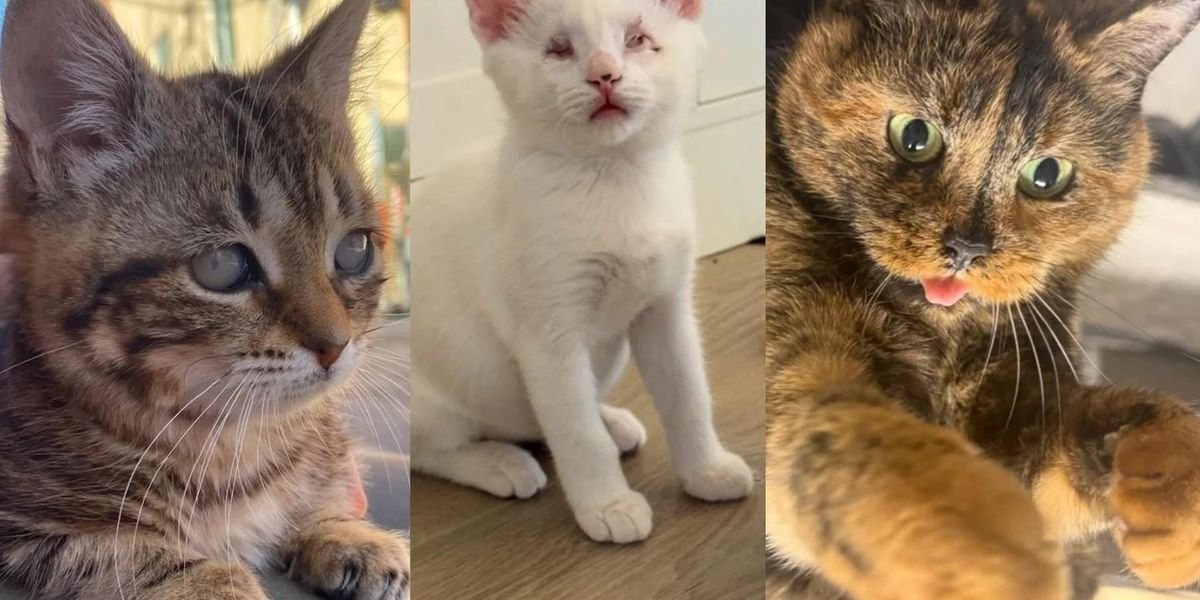
Through a collection of scattered notes and stream-of-consciousness writing, we get to know the larger-than-life personalities of the many cats Valentina has rescued over the years.
Some of the feline stars include:
- Glikò, whose name means “sweet” in Greek, but who seems to have chosen a very different path by making destruction her personal art form.
- Bibi and Bibò, who have taken on the very important “job” of lifeguards at Kampos Beach.
- Igor, the patriarch of a cat colony who was impossible to trap for neutering and continued expanding his family.
- Nimue, who shared a unique bond with Valentina and whose behavior helped alert her to a serious illness, ultimately saving her life.
- Erik, her beloved ginger cat, who stayed by her side through some of the most difficult moments of her life.
And these are only a few of the cats you’ll meet in the book. There are many more, each with their own story, personality, and special way of making life more complicated and entertaining.
Some are incredibly affectionate. Others are tiny troublemakers who seem determined to test the limits of human patience. Together, they perfectly capture the reality of living with rescue cats: the endless cuddles, the worry, the chaos, and the strange situations you somehow find yourself accepting as completely normal.
Because if cats are good at one thing, it’s getting humans to do exactly what they want. They know how to appear starving five minutes after dinner, how to demand attention at the worst possible moment, and how to make you forgive almost anything.
Valentina sums up the typical Aegean cat perfectly:
“Appears exclusively when there’s food; knows at least four tourist languages; sleeps anywhere; fakes chronic malnutrition; has at least three homes; manages to look tragic even right after eating half a kilo of fish; pays no rent; probably has more emotional stability than you do.
Hunting techniques: the fixed stare, the plaintive meow, the theatrical roll, the fake weakness, the sudden tragic limp.
Natural predators: none. Not even God dares to contradict them.”
This dry, slightly dark humor is what makes the book so much fun to read. As Valentina explains: “I always had a black sense of humor. And as I got older, it became even darker.”
Sample chapter: Carla and her slaves
Beach cats have developed a terrifying form of social intelligence. Carla is the perfect example.
We call her Carla. She probably has at least 12 fake identities and paperwork registered in 13 different countries.
That day my friend Sarah and I just wanted a few peaceful hours on the beach. Mistake. The moment we arrived, Carla appeared, followed by Carlotta and Jessicah, and the famous dance began immediately: “I’m dying of hunger.” They rub against you, they meow, they fake extreme weakness.
I fall for it, obviously. I pull out the kibble before I’ve even laid my towel down, and Carla launches herself onto it with all the delicacy of a possessed bulldozer. She eats as though she hasn’t seen food since the fall of the Byzantine Empire. I even feel guilty: “Oh God, poor thing…” I’d been there two days earlier. Two.
Half a hour passes. A woman turns up with a gigantic sack of kibble. Carla immediately kicks off again with tragic eyes, an orphan’s meow, the full theatrical performance. We discover that this woman has been feeding her since June, calls her Abby, and is convinced she only survives thanks to her. Carla eats again, then goes back to snoring on our towels.
An hour later, a car pulls up. Another woman gets out with tins, bowls, and eye drops – because of course Carla also has a delicate eye to maintain. This one calls her Tina, and is convinced Tina loves her, that Tina depends on her, that Tina is basically her daughter. Carla eats AGAIN. Then goes back to sleep.
Towards evening, a young man arrives with a backpack. The shameless little hussy runs up to him, purring and nuzzling. To him, though, she’s Trilly, and he brings food for Trilly, Milly, and Reddy.
By that point, Sarah and I had stopped talking altogether. We just sat there, watching the horror unfold.
Five hours on the beach. Three confirmed slaves. Three. And we were probably only there for the afternoon shift.
I’m fairly certain the beach cats are running an organized criminal network, complete with shifts, contacts, and seasonal strategic planning.
Is The Bloody Greek Cat worth reading?
If you love cats, Greece, or funny true stories about unexpected adventures, The Bloody Greek Cat is definitely worth adding to your reading list.
Valentina’s descriptions of the cats, their ridiculous behavior, and the everyday chaos of life on Paros will have you laughing out loud.
But this isn’t just a collection of funny cat stories. Behind the humor is a very honest look at what caring for stray cats on a Greek island is actually like: the worries, the exhaustion, the emotional rollercoaster, and the many challenges that come with trying to help animals that desperately need it.
One of my favorite parts of the book, however, was actually not about cats at all, but about everyday life on Paros. Valentina writes about the things visitors rarely see: the power cuts, the quiet winter months when shops and tavernas close, the challenges of accessing serious medical care, and all the small realities that come with living on a Greek island year-round.
If you’ve ever dreamed about moving to Greece, spending a few months on a Greek island while working remotely, or simply wondered what life is like beyond the postcard images, this book offers a much more realistic picture than most travel guides.
Helping the cats of Paros
There’s another wonderful reason to buy this book: the profits go directly to the Chubby, Lazy & Definitely-Not-Really-Disabled Aegean Cats Fund, helping pay for cat food, veterinary care, and other expenses.
The name of the fund is an inside joke. In reality, it is simply Valentina and her partner caring for around 35 cats at home (mostly feral cats who are free to come and go), as well as two additional colonies on the island. Altogether, they look after around 70 cats.
Where to buy this funny memoir
The book is currently only available as a digital edition through Payhip.
Valentina chose not to publish through Amazon because she says it goes against her principles: “Enriching a Bezos who pays his employees a pittance and treats them like objects gets on my nerves.”
You can get a digital copy in your preferred format (DOC, EPUB, PDF, MOBI, etc.) by contacting Valentina at stregadellerose@gmail.com.
A copy costs €4.99 via PayPal or bank transfer.
You can also purchase it directly through Payhip:
Want to help more cats on Paros?
If reading about these cats has made you want to help them, you can also check out the annual Paros Cats charity calendar created by the cat rescue organization ParosCat.
The calendar can be purchased online or through bookstores and pet stores in Naousa, Parikia, and Marpissa.
Thank you for reading—and for helping the cats of Paros.
More books about Greek cats to add to your reading list
Photos courtesy of Valentina Cassandra Visco.