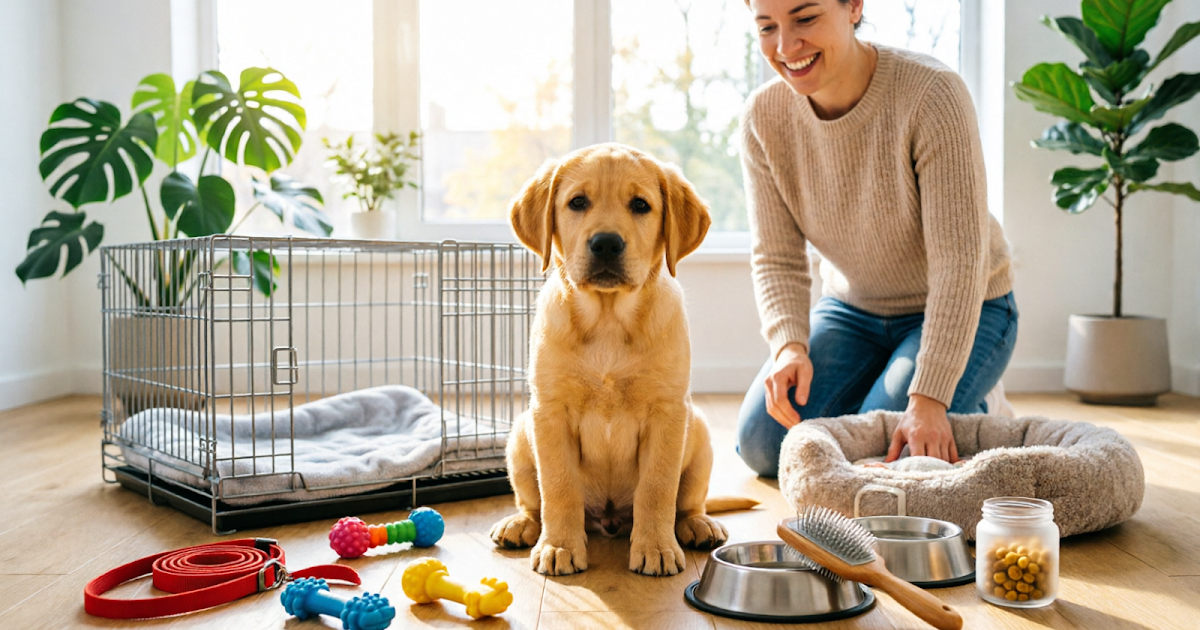
30 Things You Need Before Bringing Your Puppy Home
⏱ Estimated reading time: 15 min read

Bringing
home a new puppy is exciting, but having the right supplies ready before your
puppy arrives can make the transition much easier. This 30 things you need
before bringing your puppy home checklist covers the essentials for
feeding, sleeping, potty training, grooming, training, safety, transportation,
and everyday care. Instead of buying everything you see in a pet store, you can
use this guide to prioritize the products your puppy will actually need during
those important first weeks.
A puppy
doesn’t need an enormous collection of expensive gadgets on day one. What they
need most is a safe environment, nutritious food, a comfortable place to sleep,
appropriate supervision, consistent routines, veterinary care, and plenty of
patience. The right equipment simply makes those responsibilities easier.
Before your
puppy arrives, it’s also worth preparing your home and deciding on household
rules. The American Kennel Club recommends puppy-proofing areas that the puppy
can access and preparing essentials such as food, bowls, a crate, a collar,
leash, toys, and cleaning supplies. Let’s
look at the 30 things worth having ready.
1. Puppy
Food
Food should
be at the top of your shopping list. Choose a
complete and balanced puppy diet appropriate for your puppy’s life stage, breed
characteristics, and expected adult size. Large- and giant-breed puppies have
different nutritional considerations from small breeds, so don’t assume that
one food is appropriate for every puppy.
If possible,
ask the breeder, rescue organization, or previous caregiver what your puppy has
been eating. Keeping the same food initially can make the transition less
stressful. If you decide to change foods, make the transition gradually rather
than suddenly changing the diet. These are
the three reputable puppy-food brands to consider:
1. 2. Food
Bowl
Your puppy
needs a dedicated food bowl. Stainless
steel is a practical option because it is durable and easy to clean. Choose a
size appropriate for your puppy rather than buying an enormous bowl because you
expect the dog to grow.
3. Water
Bowl
Fresh water
should be available to your puppy throughout the day. A sturdy
bowl that doesn’t slide easily across the floor can make feeding areas much
less messy. For puppies
that tend to knock everything over, a heavier or non-slip bowl can be
particularly useful.
4. Puppy
Crate
A properly
sized crate can provide your puppy with a safe resting area and can also make
house-training and transportation easier. The crate
shouldn’t be so large that your puppy can comfortably use one end as a bathroom
and the other as a sleeping area.
Introduce
the crate gradually and use positive associations rather than forcing your
puppy inside. AAHA recommends helping puppies develop positive associations with their crate
rather than using it as punishment. You can check the MidWest iCrate on Amazon
5.
Comfortable Puppy Bed
Your puppy
will spend a significant amount of time sleeping. Choose a bed
that is:
- Comfortable
- Washable
- Durable
- Appropriately sized
- Easy to clean
Don’t be
surprised if your puppy chews the first bed you buy. For that reason, an
inexpensive washable bed can sometimes make more sense initially than an
expensive designer bed.
6. Puppy
Collar
A properly
fitted collar is useful for identification and everyday handling. Check the
fit regularly because puppies grow quickly. You should
be able to comfortably fit a couple of fingers between the collar and your
puppy’s neck without making it loose enough to slip over the head.
7.
Adjustable Harness
A harness
can be particularly useful while your puppy is learning to walk on a leash. A properly
fitted harness distributes pressure across the body rather than concentrating
it around the neck. However,
equipment doesn’t replace training. Your puppy still needs to learn how to walk
calmly.
8. Puppy
Leash
Choose a
lightweight leash that’s appropriate for your puppy’s size. A very heavy
leash can be uncomfortable for a small puppy and may make early leash training
more difficult. A standard
leash is generally a better starting point than immediately giving a puppy a
very long retractable leash.
9. ID Tag
An
identification tag is a simple but important safety item. Include
useful information such as:
- Puppy name
- Your phone number
- Optional secondary contact
Even if your
puppy is microchipped, an ID tag can allow someone who finds the dog to contact
you immediately.
10.
Microchip
A microchip
provides permanent identification and is particularly important if your puppy
becomes lost. Unlike a
collar, a microchip cannot simply fall off. Make sure
the registration information is kept current whenever your telephone number,
address, or other contact details change.
11. Puppy
Gates
Puppy gates
allow you to control where your puppy can go. Instead of
giving a curious puppy access to your entire house immediately, you can create
a smaller, safer area. This is
particularly useful for:
- Kitchens
- Stairways
- Bedrooms
- Areas containing electrical
equipment - Rooms with fragile furniture
The AKC also
recommends barriers such as dog gates and exercise pens when establishing safe
boundaries.
12.
Exercise Pen
An exercise
pen can provide your puppy with a controlled area for play, rest, and
supervised activities. It’s
particularly useful when you need to keep your puppy nearby but cannot safely
allow them to wander around the entire house.
13. Puppy
Training Pads
Training
pads can be useful during the early stages of house-training, particularly for
puppies that cannot yet reliably go outside. However,
they should be used as part of a consistent potty-training routine rather than
as a permanent substitute for outdoor bathroom training if your goal is for
your dog to eliminate outside.
14.
Enzyme-Based Cleaning Solution
Accidents
are normal during puppyhood. A regular
household cleaner may remove the visible mess without completely eliminating
the odor that a dog’s sensitive nose can detect.
An enzymatic
cleaner designed for pet accidents can help clean affected areas more
thoroughly. This is one
of those inexpensive products you’ll probably appreciate much more after the
third accident on your carpet.
15. Poop
Bags
You’ll need
these from the beginning. Keep a
supply:
- Near the door
- In your walking bag
- In your vehicle
- In your yard if appropriate
Having them
available makes responsible cleanup much easier.
16.
Puppy-Safe Chew Toys
Puppies
explore their environment with their mouths, and chewing is a normal part of
development. Provide
several appropriate chew toys so your puppy has something acceptable to bite. Avoid toys
that are too small or that can easily break into pieces and be swallowed. Always
supervise your puppy with new toys and remove damaged toys.
17.
Interactive Puzzle Toy
A puzzle toy
can provide mental stimulation and make mealtimes more interesting. It can also
be useful when you want to give your puppy something constructive to do. Start with
simple puzzles and increase difficulty as your puppy learns.
18.
Training Treats
Small, soft
treats can make early training easier. The best
training treats don’t have to be expensive. They simply need to be small enough
that you can reward your puppy frequently without providing excessive calories. Remember
that treats are part of your puppy’s overall calorie intake.
19. Treat
Pouch
A treat
pouch keeps rewards within reach during training. This may
sound like a minor purchase, but it can make a big difference when you’re
trying to reward good behavior quickly. Instead of
walking to the kitchen every time your puppy sits correctly, you can have
rewards ready.
20.
Clicker
A clicker is
an inexpensive training tool that can help mark the exact moment your puppy
performs a desired behavior. It isn’t
essential—verbal markers can work too—but some owners find clicker training
useful. The
important part is consistency and positive reinforcement.
21. Puppy
Brush
Start
grooming early, even if your puppy has a short coat. Gentle
brushing helps your puppy become comfortable with handling and gives you an
opportunity to check the skin and coat. The
appropriate brush depends heavily on your puppy’s coat type.
22. Puppy
Shampoo
You don’t
necessarily need to bathe your puppy frequently. However,
having a mild dog-specific shampoo available can be useful when your puppy
inevitably discovers something unpleasant to roll in. Avoid using
human shampoo unless your veterinarian specifically recommends it.
23. Nail
Clippers or Nail Grinder
Puppies need
to become comfortable with having their paws handled. Start
slowly. Touch the
paws, reward your puppy, and gradually introduce the sound and sensation of
nail trimming. The goal
isn’t simply to cut the nails—it’s to teach your puppy that paw handling
doesn’t have to be frightening.
24. Dog
Toothbrush and Toothpaste
Dental care
should start early. Use
toothpaste specifically formulated for dogs rather than human toothpaste. Introducing
brushing gradually can make future dental care much easier. Start with
short sessions and reward cooperation.
25.
Ear-Care Supplies
Depending on
your puppy’s breed and veterinary recommendations, you may need an appropriate
canine ear-cleaning product. Don’t
routinely put products into your puppy’s ears without knowing that they’re
appropriate.
If the ears
are painful, smell unusual, contain significant discharge, or your puppy
constantly scratches them, speak with your veterinarian instead of simply
cleaning them at home.
26.
Puppy-Safe Travel Carrier or Car Restraint
Your puppy
will probably need transportation to:
- The veterinary clinic
- Training classes
- Grooming appointments
- Family visits
- Other safe destinations
A properly
sized carrier or appropriate vehicle restraint can help make travel safer. If you’re
bringing your puppy home by car, prepare the transportation equipment before
pickup day rather than improvising at the last minute.
27.
Washable Blankets or Towels
Have several
old or washable blankets available. They can be
used:
- In the crate
- On the puppy bed
- In the car
- During accidents
- During baths
- For comfort
A
familiar-smelling blanket can also help make the first few nights less
stressful.
28. Puppy
First-Aid Supplies
A basic pet
first-aid kit can be useful for minor situations, but it isn’t a substitute for
veterinary treatment. Your kit
might include basic items such as:
- Gauze
- Bandages
- Disposable gloves
- Saline suitable for appropriate
wound/eye use - Tweezers for suitable minor
tasks - Digital thermometer
Before
treating anything serious yourself, contact your veterinarian.
29.
Veterinary Records Folder
Create a
folder—physical or digital—for your puppy’s important records.
Keep:
- Vaccination records
- Deworming information
- Microchip information
- Veterinary examination records
- Medication history
- Insurance information if
applicable - Breeder/rescue paperwork
If your
puppy comes from a breeder or rescue, ask for the available health and
vaccination documentation. The AKC also
recommends providing new puppy owners with records and information about
feeding, worming, microchip enrollment, and veterinary care.
30.
Patience, Time and a Consistent Routine
This is the
most important item on the entire list—and unfortunately, you can’t buy it on
Amazon.
Your puppy
needs:
- Patience
- Supervision
- Sleep
- Training
- Positive reinforcement
- Consistent rules
- Regular meals
- Potty breaks
- Socialization
- Veterinary care
- Plenty of appropriate rest
AAHA’s
current guidance emphasizes that the first days and weeks require patience,
empathy, supervision, and positive reinforcement. It also explains that puppy
socialization is about helping puppies become comfortable and relaxed around
different people, animals, and situations—not simply letting them play wildly
with other dogs.
What You
Don’t Need to Buy Immediately
One mistake
new puppy owners make is buying everything at once.
You probably
don’t need:
- Ten different beds
- Twenty toys
- Expensive designer accessories
- Multiple types of leashes
- Every grooming tool available
- Huge quantities of treats
- Complicated electronic gadgets
Start with
the essentials. Once you
understand your puppy’s personality, size, coat type, chewing habits, feeding
preferences, and training needs, you can buy additional products that actually
solve a problem.
Your New
Puppy Shopping Checklist
Here’s a
simplified version you can save:
Feeding
- Puppy food
- Food bowl
- Water bowl
- Training treats
Sleeping
& Containment
- Puppy crate
- Puppy bed
- Blankets
- Puppy gates
- Exercise pen
Walking
& Identification
- Collar
- ID tag
- Harness
- Leash
- Microchip
Training
& Enrichment
- Chew toys
- Puzzle toy
- Clicker
- Treat pouch
- Training pads
Grooming
- Puppy brush
- Puppy shampoo
- Nail clippers/grinder
- Dog toothbrush
- Dog toothpaste
- Appropriate ear-care supplies
Cleaning
& Safety
- Enzyme cleaner
- Poop bags
- Towels
- Basic pet first-aid supplies
Health
& Records
- Veterinary appointment
- Vaccination records
- Deworming records
- Microchip registration
- Veterinary records folder
Transportation
- Travel carrier or appropriate
car restraint
Before
Your Puppy Arrives: Prepare Your Home
Buying
supplies is only half the job. Walk through
your home from the puppy’s perspective. Electrical cables, medications,
cleaning products, small objects, accessible trash, shoes, and certain plants
can become hazards.
The AKC
recommends securing cleaning supplies, electrical cords, valuable objects,
garbage, and other hazards, while also checking outdoor areas for fence gaps
and potentially toxic plants.
You should
also decide your household rules before the puppy arrives.
- Will the
puppy be allowed on the sofa? - Where will
they sleep? - Who feeds
them? - Where will
they go to the bathroom? - Which rooms
are off limits?
Everyone in
the household should follow the same rules. AAHA similarly recommends agreeing
on routines and household rules before the puppy arrives.
Remember
that creating a healthy environment involves more than removing physical
hazards. Puppies should also be protected from harmful environmental exposures
such as cigarette smoke. Learn more in our guide Is Secondhand Smoke Bad
for Dogs? Risks, Symptoms & How to Protect Your Pet.
Don’t
Forget Your Puppy’s First Veterinary Visit
Your
shopping list shouldn’t be the only thing you prepare. Arrange a
veterinary appointment and bring your puppy’s available health records. Your
veterinarian can assess your puppy’s health and create an individualized
preventive-care plan.
Vaccination
recommendations depend on factors such as age and lifestyle. AAHA’s canine
vaccination guidelines identify core vaccines and also emphasize that
additional vaccines may be appropriate depending on an individual dog’s risks
and lifestyle.
Your
veterinarian can also discuss:
- Parasite prevention
- Nutrition
- Vaccinations
- Deworming
- Microchipping
- Dental care
- Spay/neuter timing
- Training and socialization
- Breed-specific health concerns
Don’t rely
on a generic online vaccination schedule when your veterinarian can create a
plan specifically for your puppy. It’s also
useful for new owners to recognize potential warning signs early. Our guide to The
15 Most Common Dog Eye Problems: Symptoms, Causes, Treatment & Prevention explains common symptoms and when eye changes may require veterinary attention.
Best
Products for a New Puppy
If you’re
shopping on Amazon, I’d focus your affiliate recommendations around products
that solve obvious problems rather than stuffing every section with links.
Best Overall Puppy Starter Purchase
A
properly sized puppy crate
Why? It can
serve as a safe resting area, support house-training, and provide a familiar
space during travel.
Best Training Purchase
An
adjustable puppy harness and lightweight leash
Useful for
controlled walks and early leash training.
Best Enrichment Purchase
A durable
puppy-safe puzzle or treat toy
Useful for
mental stimulation and keeping your puppy occupied appropriately.
Best
Grooming Purchase
A brush
appropriate for your puppy’s coat
Getting your
puppy accustomed to grooming early can make future grooming sessions easier.
Best
Convenience Purchase
An
enzyme-based pet stain cleaner
Because
accidents happen.
Affiliate
Disclosure:
Doglopedix may earn a commission when readers purchase qualifying products
through affiliate links, including Amazon affiliate links, at no additional
cost to the buyer. Only recommend products that genuinely fit the needs
described in the article.
Frequently
Asked Questions
What
should I buy before bringing a puppy home?
At minimum,
have puppy food, food and water bowls, a crate or safe sleeping area, collar,
ID tag, leash or harness, appropriate toys, cleaning supplies, and basic
grooming supplies ready. You should also prepare a safe area of your home
before the puppy arrives.
What do
puppies need most?
Puppies need
much more than physical products. They need consistent routines, supervision,
sleep, positive training, socialization, proper nutrition, veterinary care, and
patience.
Do I
really need a puppy crate?
A crate
isn’t mandatory for every household, but it can be extremely useful for safe
confinement, travel, rest, and house-training. If you use one, introduce it
gradually and make it a positive place rather than a punishment area.
How many
toys should I buy for a new puppy?
You don’t
need dozens. Start with several safe options, such as chew toys, interactive
toys, and soft toys appropriate for supervised play. Rotate them to maintain
interest and inspect them regularly for damage.
When
should my puppy see a veterinarian?
Arrange a
veterinary appointment soon after bringing your puppy home so your veterinarian
can review the puppy’s health history and establish an appropriate
preventive-care plan.
Should I
buy everything on this list?
No. Think of
this as a comprehensive checklist, not a requirement to purchase 30 products
immediately. Start with the essentials and add items as you learn more about
your puppy.
Veterinary
Disclaimer
The
information in this article is intended for general educational purposes and is
not a substitute for professional veterinary advice, diagnosis, or treatment.
Every puppy has different nutritional, vaccination, behavioral, and healthcare
needs. Always consult a licensed veterinarian regarding your puppy’s diet,
vaccinations, parasite prevention, medications, training concerns, and other
healthcare decisions. If your puppy shows signs of serious illness, injury,
difficulty breathing, repeated vomiting, severe diarrhea, weakness, seizures,
or other concerning symptoms, seek veterinary care promptly.
Conclusion
Bringing a
puppy home doesn’t have to mean spending hundreds of dollars on every product
marketed to new dog owners. The smartest
approach is to prepare the essentials first: nutritious puppy food,
bowls, a safe sleeping area, identification, walking equipment, appropriate
toys, grooming supplies, cleaning products, and a secure environment.
Then focus
on the things that can’t be purchased online—patience, supervision,
consistency, training, socialization, and veterinary care. A good puppy
setup isn’t about having the most expensive equipment. It’s about creating an
environment where your puppy can safely learn, sleep, play, explore, and
develop into a confident adult dog.