
Dog aggression toward its owner can feel especially upsetting because this is the person the dog knows, lives with, and should feel safest around. When a dog growls, snaps, bites, or threatens the person caring for him, it can really hurt your feelings. But in most cases, the dog is reacting to pressure, fear, confusion, pain, guarding, or a situation he doesn’t know how to handle calmly.
In this post, we’ll cover:
-
- What dog aggression toward an owner can look like
- Common situations that trigger owner-directed aggression
- Why a dog may target one owner but not another
- Why you should never ignore growling
- Safe ways to respond without making the problem worse
- When it’s time to seek professional training
- My recommendation for effective dog training for aggression
Affiliate Disclosure: This post contains affiliate links. If you make a purchase, I’ll earn a commission (at no extra cost to you). I donate 10% of my profits to animal charities.
👉 Need a fast solution? Check out The Dog Calming Code, my top recommendation for dog aggression training.

What Dog Aggression Toward an Owner Can Look Like
Aggression toward an owner doesn’t always look like a dramatic attack. Sometimes it starts with freezing, hard staring, lip lifting, growling, snapping, or turning the head quickly toward your hand. A dog may only do this during certain situations, which is why it can be confusing.
For example, your dog may be sweet most of the day but growl when you try to move him off the couch. He may follow you around lovingly, then snap when you touch his collar. He may cuddle with you, but become defensive during grooming, nail trimming, bathing, or medication.
That pattern matters. The question is not just, “Why is my dog aggressive?” It’s, “What is happening right before my dog becomes aggressive toward me?”
Common Causes for Dogs Becoming Aggressive Toward Their Owner
Owner-directed aggression often shows up during everyday handling. This may include putting on a harness, wiping paws, cleaning ears, trimming nails, brushing mats, giving pills, lifting the dog, or touching a sore area.
It can also happen when an owner takes something away. A dog may guard food, treats, toys, stolen items, laundry, tissues, bones, or even a favorite resting spot. From the dog’s point of view, the owner approaching may predict loss, discomfort, or conflict.
Some dogs also react aggressively when being moved. This can happen when the dog is on the bed, couch, in a crate, under a table, or in a doorway. I guess this is where many owners accidentally make things worse, because the natural reaction is to scold, grab, or force the dog to move. But if the dog already feels threatened, that can escalate the problem.
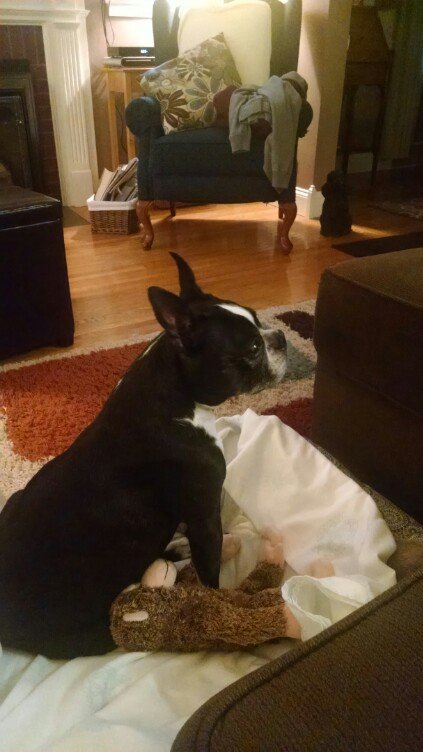
This reminds me of my Boston Terrier, Cagney. That’s him in the picture with his favorite toy, Monkey. My ex-husband and I adopted Cagney when he was around 10 years old (the dog, not the husband, lol) I wanted Cagney to be in our room at night because he was elderly and nearly blind, but he’d often refuse to go upstairs to bed! So my husband would pick him up, and Cagney would get nasty! He never bit, but he was trying hard to be ferocious!
Why a Dog May Be Aggressive Toward One Owner But Not Another
One of the most frustrating situations is when a dog acts aggressively toward one owner but not another. This doesn’t always mean the dog “likes” one person more. It may mean one person handles the dog more often, gives medication, corrects behavior, removes objects, or pushes the dog physically when the other person doesn’t.
Dogs notice patterns. If one owner is usually the person who trims nails, takes away items, gives baths, or pulls the dog off furniture, that owner can become associated with pressure. The dog may begin reacting before anything even happens because he expects something unpleasant.
This is also why punishment can be risky with aggression. A dog who is already worried about being handled may become even more defensive if he learns that growling leads to yelling, grabbing, or intimidation.
Do Not Ignore Growling at the Owner
Growling is not something to punish or dismiss. It is information. A growl is often your dog saying, “I’m uncomfortable,” “Please stop,” or “I don’t know how else to handle this.”
If growling is punished, some dogs stop warning and go straight to snapping or biting. That doesn’t mean you should allow aggression. It means you should take the warning seriously and change the way the situation is being handled.
For more background on growling specifically, you can read my post, Why Do Dogs Growl?
How to Start Handling Owner-Directed Aggression More Safely
The first step is to stop forcing confrontations whenever possible. Do not grab your dog’s collar, reach suddenly toward his face, corner him, take items directly from his mouth, or physically drag him off furniture if those situations have triggered aggression before.
Instead, use space, calm movement, and trade-based handling. Teach your dog that moving, releasing an item, or allowing touch leads to something good. Toss a treat away from the couch instead of pulling him off. Trade for a stolen item instead of prying his mouth open. Pair grooming tools with rewards before actually grooming.
This is not “letting the dog win.” It is changing the emotional reaction that is causing the behavior.
Watch My Video: How to Stop a Dog from Being Aggressive
When Dog Aggression Toward Its Owner Needs Serious Help
If your dog has bitten you, broken skin, lunged at your face, guarded multiple areas, or is becoming more unpredictable, please do not try to handle this alone. Owner-directed aggression can become dangerous quickly because you live with the dog and interact with him every day.
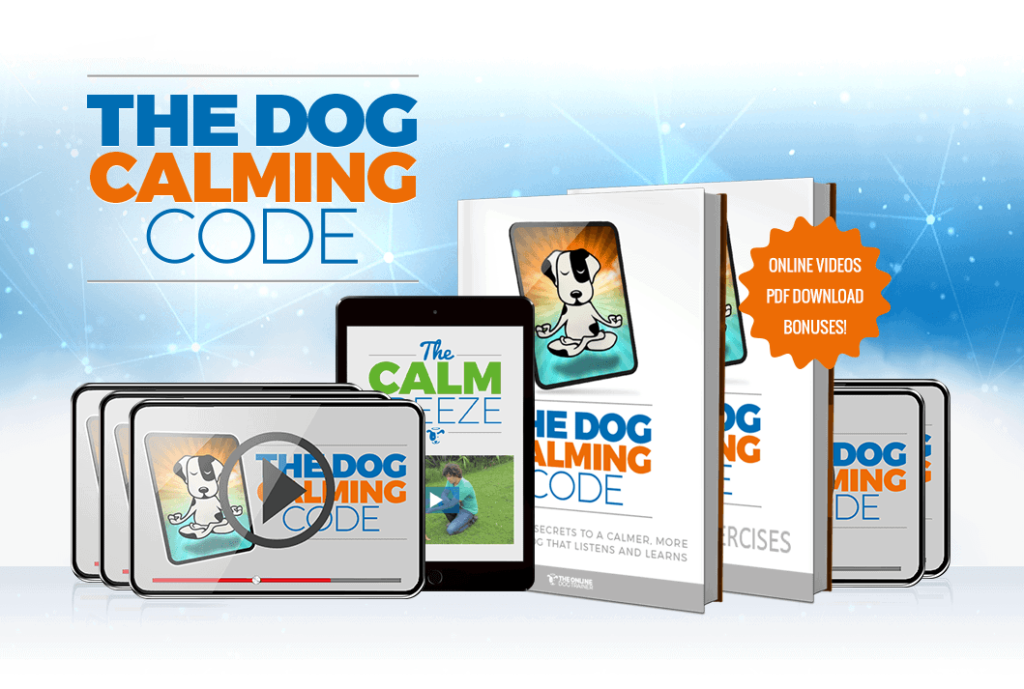
This is where structured training can make a huge difference. I recommend The Dog Calming Code, created by Professional Dog Trainer and Behavioral Specialist, Doggy Dan, because it focuses on changing the dog’s state of mind, not just reacting to bad behavior after it happens.
The exercises within this program help your dog feel confident following your guidance in a calm, positive way. Dogs often become anxious when they feel responsible for making decisions, so helping them trust your leadership can reduce stress and improve behavior immensely.
You can also read my post, Training to Stop Dog Aggression, to learn why this program works for aggression.
For a deeper look at the program itself, read my Dog Calming Code Review.
For More Advanced Aggression & Reactivity Training
For dog owners who want even more depth on aggression and reactivity, Doggy Dan also offers a dedicated program called Solve Reactivity & Aggression. Where the Dog Calming Code teaches the foundational 5 Golden Rules that build trust and calm leadership, this program expands into a full breakdown of aggression-specific training, walking you through reactivity on walks, aggression toward people, aggression toward other animals, and even aggression toward objects like vacuum cleaners or TVs.
It includes a complete case study following a real dog, Cruz, through the training process, along with practical tools like proper muzzle use, the Long and Short Line techniques, the Energy Meter, and guidance for households with multiple dogs who aren’t getting along.
Both programs are built on the same core approach, so whether you start with the Dog Calming Code or go straight for the more comprehensive Solve Reactivity & Aggression course, you’re getting Doggy Dan’s proven method — the difference is simply how much detail and how many specific scenarios you want covered from the start.
Your Dog is Not Trying to Betray You
Dog aggression toward its owner feels personal, but it usually isn’t. Your dog may be scared, defensive, guarding something, expecting conflict, or reacting to discomfort. Once you understand the pattern, you can start changing the way your dog feels during those moments.
Be patient, but also be careful. Aggression directed toward an owner should always be taken seriously, especially if the behavior is escalating.
Also check out my post, Dog Aggression Toward People, where you’ll learn more about what triggers dog aggression toward people in general.
Don’t forget to grab my free list of dog aggression safety tips:
For a complete overview of how I approach aggression training, read my dog aggression guide, How to Stop a Dog from Being Aggressive: A REAL Solution (includes video).
For More Help With Dog Aggression
Dog Aggression Toward Family Members
For help with additional dog behavior issues, read my Complete Guide to Training Your Dog.
Pin it for Later!
About the Author
