10 Foods That Could Kill Your Cat — Most Owners Have Them at Home
⏱ Estimated reading time: 6 min read
You probably have at least three of them in your kitchen right now. Knowing which foods cats should never eat is one of the most important parts of keeping your pet safe. Some of the most dangerous foods for cats are found in kitchens around the world. In fact, several of these foods could potentially kill your cat if consumed in large enough quantities or if treatment is delayed.
Many cat owners assume that if a food is safe for humans, it must be safe for cats too. After all, what’s the harm in sharing a tiny bite from your plate?
Unfortunately, some everyday foods can be extremely dangerous for cats. In some cases, even a small amount can lead to serious illness, emergency veterinary treatment, or worse.
The scary part is that many of these foods are common household staples. They’re sitting in refrigerators, cupboards, fruit bowls, and kitchen drawers all over the world.
Let’s look at 10 foods that could put your cat’s health at risk.
1. Chocolate
Most people know that chocolate is dangerous for dogs, but many don’t realize it can also be toxic to cats.
Chocolate contains substances called theobromine and caffeine. Cats process these compounds much more slowly than humans.
Symptoms may include:
- Vomiting
- Restlessness
- Rapid breathing
- Increased heart rate
- Tremors
The darker the chocolate, the greater the danger.
2. Onions
Whether they’re raw, cooked, powdered, or dried, onions can damage a cat’s red blood cells.
This can lead to anemia, a condition that reduces the body’s ability to carry oxygen.
Many owners don’t realize that onion powder is often hidden in foods such as soups, sauces, chips, and seasonings.
3. Garlic
Garlic belongs to the same family as onions but is considered even more toxic to cats.
Some people mistakenly believe garlic helps fight parasites naturally. However, giving garlic to a cat can be extremely risky.
Even small amounts consumed repeatedly may cause serious health problems.
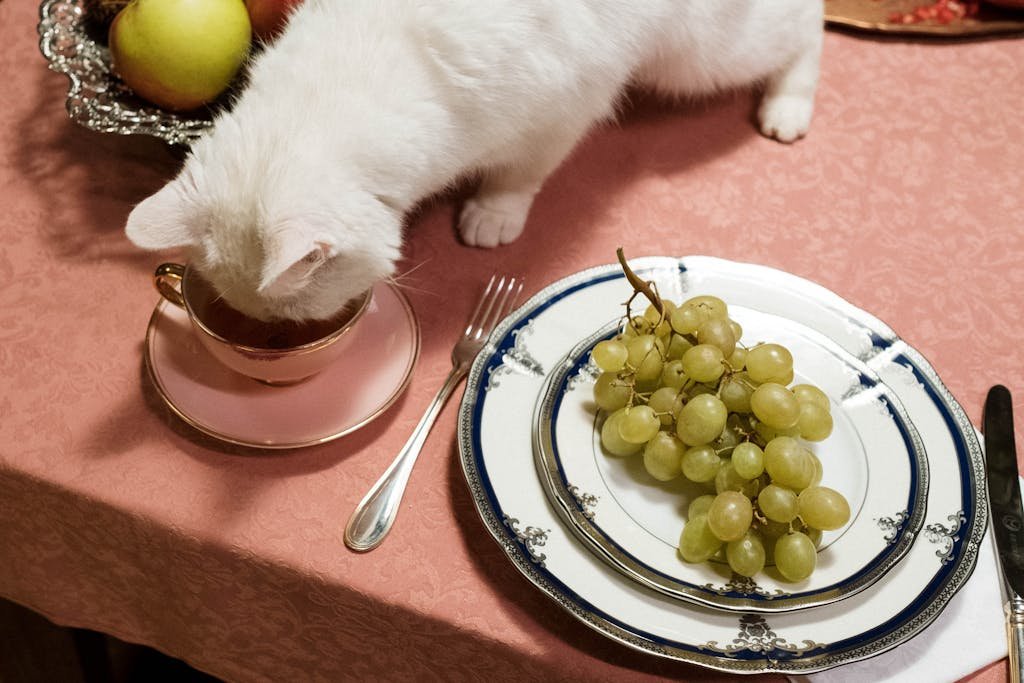
4. Grapes
Grapes seem harmless.
Yet veterinarians have reported cases where grapes and raisins caused sudden kidney failure in pets.
Researchers still don’t fully understand why some animals react so severely.
Because there is no guaranteed safe amount, it’s best to avoid them entirely.
5. Raisins
Since raisins are simply dried grapes, they carry the same danger.
The problem is that raisins are often hidden inside foods such as:
- Cookies
- Cakes
- Breakfast cereals
- Trail mixes
A curious cat only needs one opportunity.
6. Alcohol
This one may sound obvious, but accidental exposure happens more often than people think.
Alcohol can be found in:
- Drinks
- Desserts
- Fermenting dough
- Certain flavor extracts
Cats are extremely sensitive to alcohol, and even small amounts can affect the nervous system.
7. Caffeine
Coffee, tea, energy drinks, and caffeine tablets should always be kept out of reach.
Cats are much smaller than humans, which means a relatively small dose can have a much stronger effect.
Signs of caffeine poisoning may include hyperactivity, elevated heart rate, tremors, and seizures.
8. Raw Bread Dough
Many people are surprised by this one.
When a cat eats raw dough, the dough can continue expanding inside the stomach.
As yeast ferments, it also produces alcohol.
This combination can become a serious medical emergency.
9. Xylitol
Xylitol is a sweetener commonly found in sugar-free products.
You might find it in:
- Chewing gum
- Candy
- Toothpaste
- Some peanut butters
Pet owners often overlook it because it doesn’t sound dangerous.
However, products containing xylitol should never be accessible to cats.
10. Fat Trimmings and Cooked Bones
Cats may love leftovers, but fatty scraps can upset the digestive system.
Cooked bones are another hidden hazard because they can splinter into sharp fragments.
These fragments may cause choking or internal injuries.
What seems like a harmless treat can quickly become a trip to the emergency veterinarian.
Why Cats Are Vulnerable to Human Foods
Cats are obligate carnivores.
Their bodies evolved to thrive on animal-based nutrition rather than the wide variety of foods humans eat.
Because of this, some ingredients that seem harmless to us can have completely different effects on a cat’s body.
That is why it’s important to think twice before sharing food from your plate.
What Should You Do If Your Cat Eats One of These Foods?
First, don’t panic.
Try to determine:
- What your cat ate
- How much was consumed
- When it happened
If the food is known to be toxic, contact your veterinarian immediately.
The sooner treatment begins, the better the chances of preventing serious complications.
The Bottom Line
Many of the foods that pose the greatest risk to cats are sitting in kitchens around the world right now.
Chocolate, onions, garlic, grapes, raisins, caffeine, alcohol, raw dough, xylitol, and cooked bones may seem harmless to humans, but they can be dangerous for cats.
The safest approach is simple: stick to foods and treats specifically designed for feline nutrition.
Your cat may not understand why you’re refusing to share your snack, but protecting their health is always worth it.
FAQs
Can a Single Grape Hurt a Cat?
It’s difficult to predict how a cat will react to grapes because some cats may show no symptoms while others could develop serious health problems. Although grape toxicity is more commonly documented in dogs, grapes and raisins are generally considered unsafe for cats. If your cat eats a grape, monitor them closely and contact your veterinarian for advice, especially if you notice vomiting, lethargy, or changes in behavior.
Is Cooked Onion Safe for Cats?
No. Cooking does not remove the compounds that make onions dangerous for cats. Raw onions, cooked onions, onion powder, and foods containing onions can all pose a risk. Even small amounts consumed regularly may damage red blood cells and contribute to anemia.
What Should I Do If My Cat Eats Chocolate?
If your cat eats chocolate, try to determine what type of chocolate it was and approximately how much was consumed. Dark chocolate and baking chocolate are generally more dangerous than milk chocolate. Contact your veterinarian as soon as possible for guidance. Watch for symptoms such as vomiting, restlessness, rapid breathing, tremors, or an increased heart rate.
Can Cats Eat Small Amounts of Garlic?
No amount of garlic can be considered completely safe for cats. Garlic contains compounds that may damage a cat’s red blood cells, potentially leading to anemia. Because cats can vary in their sensitivity, it is best to avoid giving garlic or garlic-containing foods altogether.
Which Human Foods Are Safest for Cats?
Some human foods can be offered occasionally as treats in small amounts, provided they are plain and properly prepared. Examples include cooked chicken, cooked turkey, cooked fish without bones, and small amounts of cooked eggs. These foods should not replace a complete and balanced cat diet. Avoid adding salt, seasonings, onions, garlic, or sauces when preparing foods for your cat.