
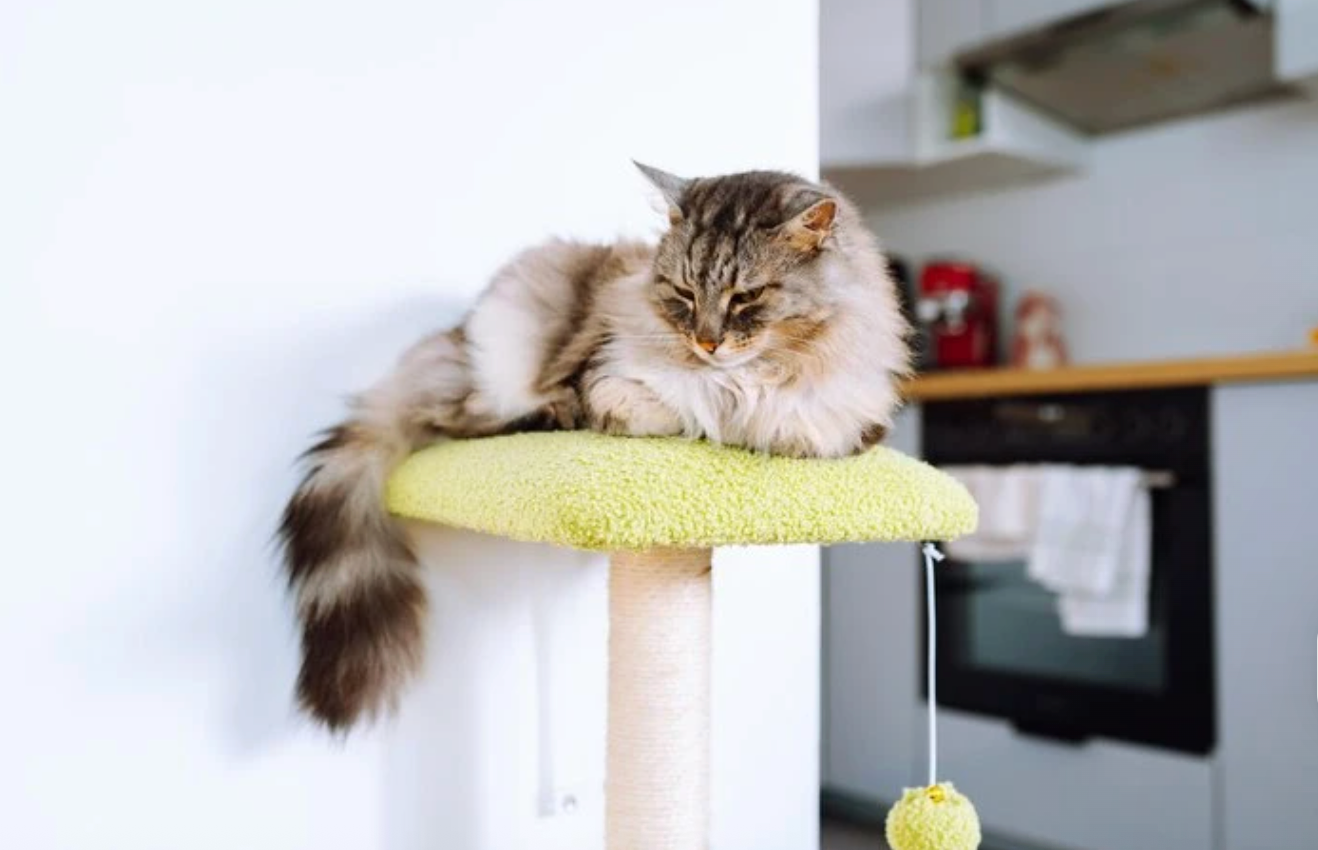
Look at the tiny paws of your adorable fluffball. Do they look like weapons of mass destruction? Well, if I were you, I would say yes, since you don’t know my cats the way I do. However, most people probably don’t think of their cat as one of the best hunters. But unfortunately, free-roaming and feral cats can have significant impacts on Australian wildlife, which is one of the reasons I keep my cats indoors.
In habitats with dense grass, feral cats (who belong to the same Felis catus species but interact differently with humans) have a hunting success rate of around 17%, but in open habitats, with less cover for prey, this percentage can in some cases rise to 70%.
Now, is your bundle of joy and hunter of treats on the same level as a cat that was raised in the wild? Maybe not. But there’s no denying that your kitty’s hunting instincts are still present and prone to come out when you least expect it.
Killer Instinct in a Fluffy Body
Cats are surprisingly efficient ambush predators, and one of the reasons for their success is their claws, for which they have an innate instinct to keep sharp. Cats are some of the best animal companions a person can have. Affectionate, independent, intelligent, clean, and long-living, your kitty can be a pet that will form a real bond with your family and reduce your stress and anxiety in moments when you need a break from the daily grind.
Research suggests that interactions with companion animals may influence stress-related physiological responses, including cortisol and oxytocin, although the effects can vary between people and situations.
In their natural environment, kitties keep their claws sharp by scratching trees, climbing and hunting. In your house, however, the only thing that’s left to hunt is your grandma’s antique sofa covers. Are those things hideous? Yes? Do you want to keep them around, and you don’t want to see them shredded? Probably also yes. So, it makes sense then for your first purchase, as a new cat owner, to be a cat scratching post bought from a local pet store.
How Can a Cat Scratching Post Help?
Cats are the second most popular type of pet in Australia, and they are present in no less than 34% of our country’s households. It’s easy to see why. Cats are intelligent, adaptable animals that can form strong bonds with their human companions; they pretty much domesticated themselves and they are capable of forming genuine emotional connections with their handlers.

Moreover, even though they can be quite distant in some cases, they love us in their own way and have no problem adapting to our daily routines and the specifics of our dwellings. However, their instincts never really go away, and if your kitty gets bored, there’s a good chance that your furniture will suffer.
What Are the Practical Benefits of a Cat Scratching Post?
Let’s start with the obvious:
An Extra Protection Layer for Your Furniture
A Way to Keep Your Kitty’s Claws Healthy
Cats scratch because it’s in their instinct. But they don’t do this just because they like to see the look of horror on our faces when we see our drapes torn to shreds (except for my cat). No, they do this because:
They have scent glands in their paws and they use scratching to mark their territory
The claw’s superficial horn layers develop microcracks through growth and bending stresses during normal use, eventually allowing the outer layers to split and peel away. Scratching rough surfaces, such as a cat scratching post, can facilitate their removal.
A cat scratching post could be a way to help your kitty perform claw maintenance. Plus, it’s good exercise for them; it can reduce unwanted behavioural elements. Scratching can also play a role in feline communication, leaving visible marks and scent from glands in the paws. It provides your kitty with a regular activity that can be repeated indefinitely.
It Can Be a Fun Activity
A cat scratching post gives your kitty an appropriate place to perform a natural scratching behaviour. But it can also act as a fun toy, with hideaways and observation perches that will distract your fluffball for hours on end, especially when you are away for work.
High-quality scratching posts can act as multifunctional spaces where cats can relax, climb, explore and observe their surroundings in a relaxed and familiar environment. If you decide to purchase one, a good rule of thumb is to place it near your kitty’s sleeping spot, or close to the furniture that was previously scratched.
If your kitty ignores the post, it’s probably a matter of choosing the right location and your kitty getting familiarized with it. That said, if a week goes by and she’s still not using it, you could consider placing catnip on it, as long as your cat is known to respond positively to it.
What About the Financial Ones?
Well, that’s pretty much self-explanatory, right?
Eliminate Furniture Repair Costs
Even though you might not be the biggest fan of your curtains, carpets or wallpaper colour scheme, you are not really in a position right now to seriously think about wide-scale redecorations, right?
Reupholstering your couch could cost more than AU$1,000, while buying a new one, in this economy, will likely set you back a couple of grand. A high-quality scratching post, purchased online or from your local pet store, will not come free. But it will be much cheaper than dealing with the costs of furniture replacements.
Reduce the Likelihood of Unwanted Events
A scratching post can give your cat opportunities to stretch, exercise and engage in normal scratching behaviour, rather than your home’s furniture. Have you ever had to remove your kitty at 3 AM because they got tangled in your doormat and were yelling? Well, I did, and believe me, it’s not fun.
It’s a Long-Term Investment
When purchased from a reputable pet store, scratching posts are accessories that could last for years and significantly aid in your kitty’s cognitive and physical development. My last scratching post, for example, lasted for 6 years, and I only had to pay AU$130 for it. That’s AU$21.67 per year when you spread out the costs.
Scratching posts are one of the most financially advantageous investments you can make for the development of your kitty, and they are available pretty much anywhere, from your local pet store to digital-only shops, with a huge array of inventory.
Author Bio
Written by CJ Fentiman, a lifelong cat owner with years of experience caring for indoor and outdoor cats.
About the Author
