How to Spot (and Treat) Dehydration in Cats
⏱ Estimated reading time: 9 min read
Cats are known for their independent personalities. However, they do still rely on us to ensure they are happy and healthy.
My two kitties, Pippen and Jinx, are incredible companions, but they are also my responsibility!
One often-overlooked risk that many cats face is dehydration. While we talk about the importance of keeping our own water bottles filled, we sometimes forget that our cats have hydration needs, too.
This, combined with the fact that cats are notorious for not drinking enough water, is a recipe for trouble.
In this post, I’ll explore the signs of dehydration in cats, the potential consequences of not addressing this concern, and some simple steps you can take to keep your best friend hydrated and healthy.
What are the Risks of Dehydration in Cats?
Before digging into the finer details of proper hydration for your cat, let’s address the most important question – How serious is dehydration in cats?
The good news is that, in its early stages, dehydration may cause discomfort, but it isn’t a significant concern.
If you address the problem at this point, you can prevent any complications or long-term health issues before they develop.
However, if dehydration is left unaddressed, it can become a life-threatening situation.
As a cat parent, you should familiarize yourself with the signs of trouble. This will allow you to handle the situation quickly before it escalates.
Of course, the best approach is to encourage proper hydration and prevent a problem from developing.
Common Causes of Cat Dehydration
There are many potential causes of dehydration, but they can all be sorted into two categories – not ingesting enough water and losing too much water.
If you trace back the line of evolution, your cat’s ancestors lived in the desert. These desert wildcats evolved to survive on less water, including having a low thirst drive.
Experts say today’s domesticated cats should drink at least 3.5 ounces of water daily for every 5 pounds of body weight.
Here are some other reasons your cat may not be drinking enough:
- Sensitivities to the taste of the water
- Location of the water bowl
- Lack of access to fresh water
- Reluctance to drink due to dental pain
- Territorial conflicts between multiple cats
It is also possible that your cat is drinking plenty of water, but they are losing water faster than they can replenish it.
Some potential causes of excess water loss include:
- Hot weather/overheating
- Overly dry air
- Heatstroke
- Fever
- Vomiting or diarrhea
- Diabetes
- Chronic kidney disease or kidney failure
- Hyperthyroidism
- Injuries/blood loss
- Medications (such as diuretics)
You must address the underlying cause to treat your cat’s dehydration; otherwise, it will quickly return.
If the cause isn’t obvious, your vet can run tests to rule out the potential medical causes.
From there, you can try changing your cat’s environment to encourage better hydration and reduce environmental triggers (like dry air).
Warning Signs Your Cat is Dehydrated
Considering the importance of early detection and action, every cat parent should learn to recognize the signs of trouble.
This can be challenging, especially in mild cases, as cats are masters of hiding pain and discomfort.
You know your cat best! Pay attention to their behaviour and appearance, keeping an eye open for any noticeable changes.
The most common warning signs of dehydration in cats include:
- Panting
- Pale gums or tongue
- Sticky or tacky gums
- Sunken eyes
- Loss of appetite
- Constipation
- Dry, brittle fur
- Increased heart rate
- Lethargy or weakness
One way to test if your cat is dehydrated is known as the “skin tenting test.” To do this, gently pinch a small amount of skin between your cat’s shoulders.
Let go and watch to see how the skin responds. If it returns right back to its normal state, they are okay.
However, if the skin stays in a tent shape and takes time to return to normal, this is a clear sign of dehydration.
If you suspect there is even a chance your cat may be dehydrated, act now.
The steps of treating dehydration won’t hurt a healthy cat, but it could save your cat’s life if they are experiencing trouble.

I Think My Cat is Dehydrated – Now What?
Contact your veterinarian immediately if you notice any combination of the warning signs listed above.
While minor cases of dehydration can be addressed at home, you don’t want to take any chances.
If you have to wait to hear back or for an appointment, consider taking this time to encourage additional hydration.
Try adding something tasty like tuna juice to a small bowl of water to entice your cat.
Another option is to mix a little additional water into a small serving of canned cat food before offering it to them.
Your vet will recommend the next steps to take depending on the severity of your cat’s condition.
9 Tips to Prevent Dehydration in Your Cat
While mild dehydration is relatively easy to treat, the best approach to any medical concern is to prevent a problem before it develops.
Here are a few simple steps you can take to reduce the risk for your cat:
Pay Attention to Your Cat’s Water Intake
The first step to improve your cat’s health and prevent dehydration is to be aware of how much water they are drinking.
Ask your vet how much water your cat should drink based on age, size, lifestyle, and health concerns.
Ongoing monitoring of your cat’s water intake will help you catch and address any dehydration concerns early.
Identify and Address Underlying Medical Problems
Of course, the most obvious step to reduce the risk of dehydration in your cat is to address any underlying medical issues that could lead to trouble.
If you suspect your cat is dehydrated, contact your vet to test and diagnose any potential problems.
Keeping up with your annual vet checkups will also allow your vet to identify and address issues early before they progress.
Always Offer Plenty of Fresh Water
Make sure your cat always has access to fresh water throughout the home.
This may mean adding additional water dishes in larger homes, being more diligent about filling dishes, or changing out water more often to keep it fresh.
Reconsider the Location of Water Dishes
In the wild, water near where they relieve themselves is often contaminated, increasing the risk of illness.
For this reason, they will often avoid drinking from dishes kept near their litterbox.
It’s also possible the current location of your cat’s dish is in an area that discourages them from drinking due to high traffic or loud noises.
For example, if your cat’s water dish is in a front hallway that people often run through, try moving it somewhere quieter where they can drink in peace.
Try New Dishes or a Fountain
Some cats are sensitive to specific dishes. They may find a bowl is too deep, causing whisker fatigue and discouraging them from drinking.
My older cat, Pippen, won’t drink from a stainless-steel dish. We believe it’s due to the reflections it creates.
Try swapping your cat’s dish for a different option to see if they will drink more water that way.
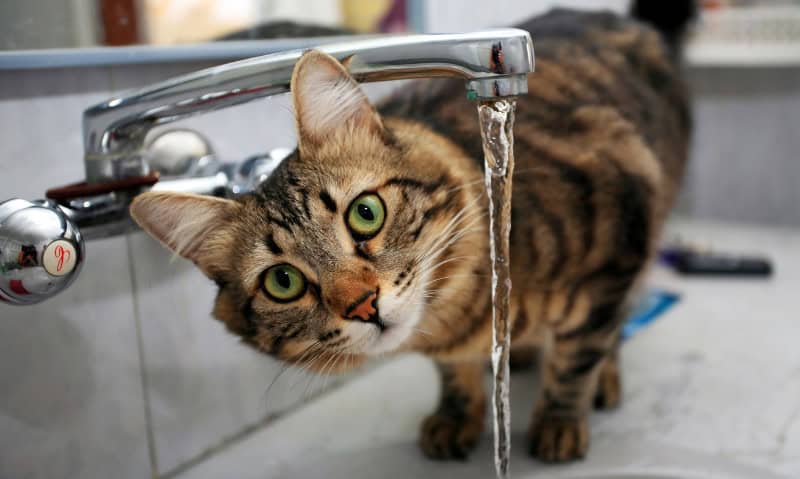
Another great option is to use a water fountain. Not only are cats drawn to moving water, but fountains also do a great job of filtering their water to keep it clean and fresh.
Our cats currently use the Catit Flower Fountain with Triple Action Filter.
Feed Wet/Canned Food
In the wild, cats would get a lot of their water intake from their meals.
However, with many domesticated cats being fed dry kibble, they aren’t getting the same level of moisture from their meals.
Some easy ways to address this include switching to feeding your cats canned food, mixing canned food with their kibble, or using a food topper that contains additional moisture.
Add Moisture to Kibble
If your cat is insistent on eating their usual kibble, it doesn’t mean you can’t still help.
Add warm water to their kibble to create a tasty gravy. You can also add other water-heavy options like sodium-free broth, bone broth, or goat’s milk.
Try experimenting with these options until you find the solution your cat likes most.
After all, the more they enjoy their new water-boosted meal, the more water they will consume during mealtimes.
Offer Moisture-Heavy Treats
Another opportunity to introduce more moisture into your cat’s diet is through treats.
Lick treats are moisture-rich with a creamy texture in a tube that many cats adore (including Pippen and Jinx).
Pro Tip: These are an excellent option for leash and harness training and offer the perfect solution for extra hydration on cat-friendly outdoor adventures.
Make Environmental Adjustments
Take a moment to consider the environment in your home and whether it is contributing to your cat’s hydration struggles.
Lower temperatures to prevent overheating, especially during the hotter summer months.
If you don’t have air conditioning, there are steps you can take to keep your home cool, including:
- Avoid using things like the oven that adds to the heat as much as possible
- Unplug unused appliances (washers, dryers, dishwashers, etc.)
- Turn off unused lights or switch to LED lights
- Covering windows to keep the sun out during the day
- Using fans to create a cross-breeze
- Close doors to unused rooms to
- Address gaps at the bottom of doors or around windows
Another important consideration is the quality of the air in your home.
If hydration levels are too high, they can create increase temperatures. However, you also don’t want the air to be too dry.
Consider using a humidity gauge to track and address humidity levels in your home.
Dry air is a common problem during winter when we run furnaces or other heating sources indoors.
Final Thoughts: Preventing Dehydration in Cats
Dehydration is a very serious and very real concern for cats, but it is easily preventable with the right information.
You can significantly reduce the risk of trouble by understanding the signs of dehydration, the potential causes, and the simple steps you can take to keep your cat properly hydrated.
Pair these efforts with annual vet checkups to identify and address potential problems early.
With a few minor changes to your home and your cat’s diet, you can set them up for a happy, healthy (and hydrated) life.
Feature Image Credit: skynesher | Canva